

New “Frankenstein” adaptation takes creative risks that ultimately pay off.
There will be some spoilers for both the book and film adaptation throughout this article for those interested in either.
“Frankenstein,” written by Mary Shelley in 1816 and published anonymously in 1818, has continued to remain a foundational piece of both classical and science-fiction ever since its publication. The story paved the way for a genre that would go on to redefine many elements of literature because in many respects, Shelley’s work is the first ever sci-fi. The original story is able to accomplish this groundbreaking development in science-fiction while still maintaining the rich, Gothic elements of its literary tradition.
Therefore, it is not surprising to see that many directors over the past century have sought to bring Shelley’s novel to the silver screen. The most recent of these adaptations is “Frankenstein,” directed by Guillermo del Toro and starring Oscar Isaac as the titular character of Victor Frankenstein. Receiving nine nominations, including nominations for Best Adapted Screenplay and Best Picture, at the upcoming Academy Awards. This film has been the recipient of much critical praise since its premier in August of last year.
And in attempting to revisit this story for a new generation, del Toro decides to change some aspects of Shelley’s original story, particularly with the main character of Victor Frankenstein. Some of these revisions to the character have especially intrigued me as someone who enjoys both the novel and the character of Frankenstein. And for better or for worse, these changes distinguish del Toro’s Victor Frankenstein from the original’s, providing the film with a unique identity that has clearly struck with both audiences and critics.
In making his adaptation, some of del Toro’s most dramatic changes surrounding the main character of Victor are with his backstory, specifically adding a new dimension to his familial relations. In the novel, Frankenstein’s upbringing is shown to be deeply affectionate, being raised in a wealthy Geneva household by loving parents. And while the film retains the character’s wealthy background, del Toro alters some of the details, particularly with his father. His parents’ marriage is highlighted as being fraught with tension and filled with verbal abuse on the part of Victor’s father. Said father is also physically abusive towards Victor, disdaining him and prioritizing his younger brother William throughout his adolescence.
This new aspect of Frankenstein’s backstory provides some explanation for another of the character’s revisions: his characterization. Shelley’s story places emphasis on both the virtuous and flawed qualities of Victor’s character in order to make the reader truly struggle with the question of whether or not he is actually the monster in this story. By contrast, del Toro pays more attention to the flawed aspects of the character, particularly highlighting the physical abuse Frankenstein inflicts on the Creature and how it echoes the abuse of his father. This characterization of Victor, while certainly adding an interesting new layer to the character, can feel somewhat one-note at times, lacking the depth that Shelley is able to provide for the character and overall hurting the story by making the titular character feel flat compared to its original.
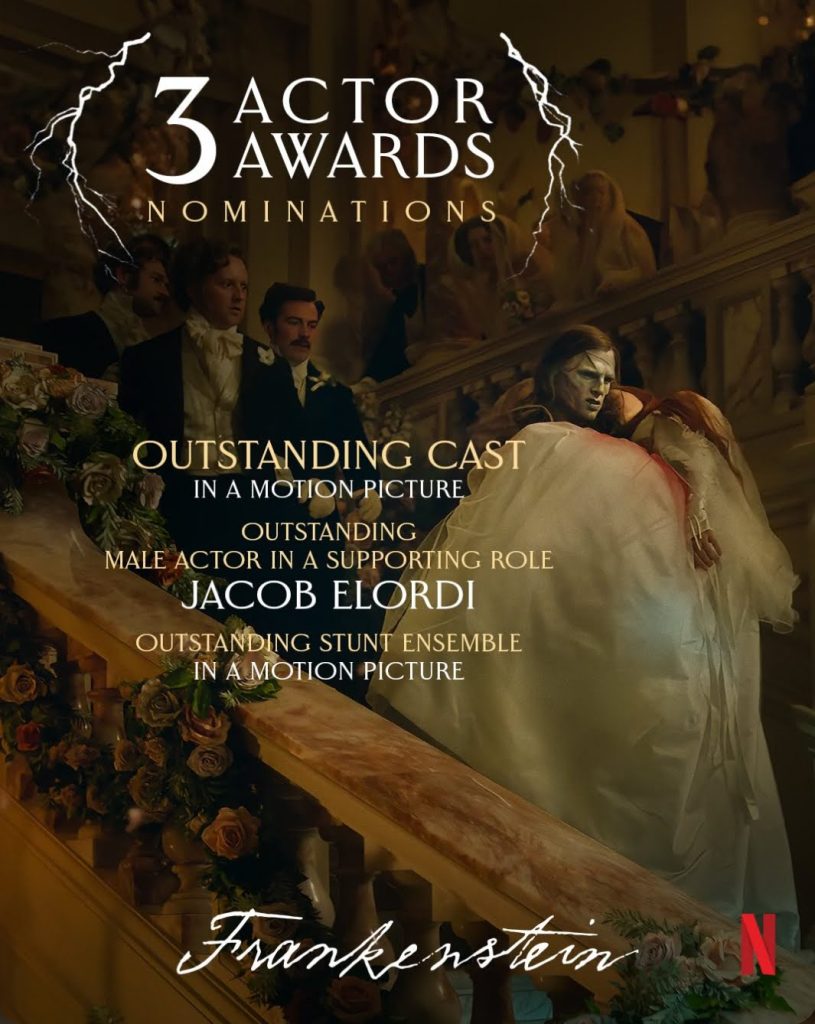
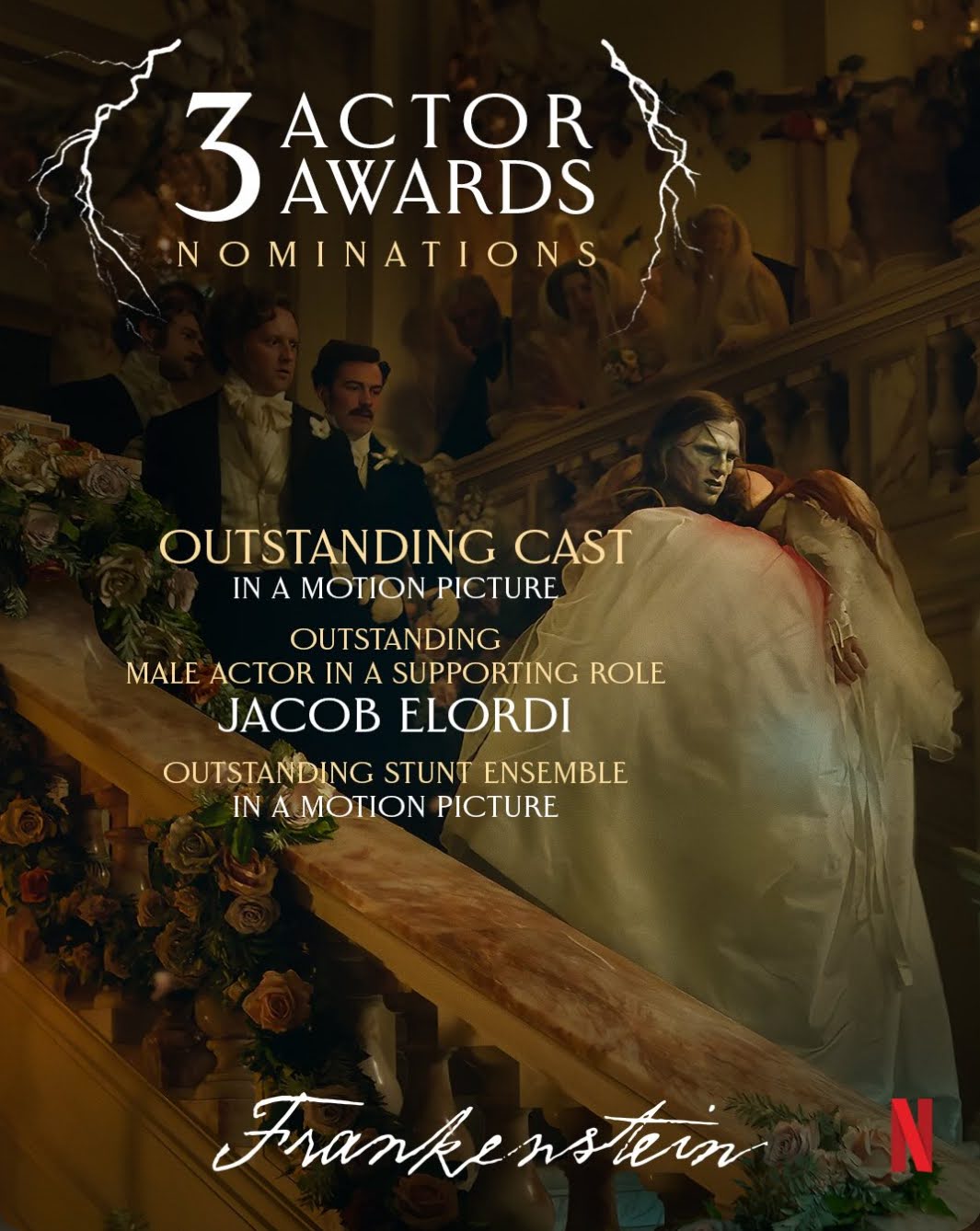
Since its release last November, “Frankenstein” has garnered much critical praise and award show attention. Courtesy of @frankensteingdt on instagram.
Another major adjustment del Toro makes is with the dynamic between Frankenstein and other characters. The familial dynamic is changed drastically, with Victor’s father now being an abusive patriarch that subsequently affects the rest of the relationships in the family. It draws his mother and him closer together, with that connection being central to Frankenstein’s character and subtly motivating him throughout the film. It also creates a layer of friction between Victor and his younger brother William, since their father was more caring towards the latter. In fact, the dynamic of the brothers is one of the most altered between the novel and movie. William, being an adult rather than a child like he is in the novel, does not receive the same protectiveness from Victor which acts as a central drive in the original story.
This age-change also modifies the framing around William’s death. No longer representing the loss of innocence in Frankenstein’s life, it becomes more like the resolution to a tragic conflict, which, in my opinion, is weaker than what Shelley wrote. Del Toro also reimagines the dynamic between Victor and Elizabeth. Rather than being engaged to each other like in the novel, Elizabeth is engaged to William despite Victor’s fixation with her. The film focuses heavily on Elizabeth’s rejection of Frankenstein and the subsequent conflicts that arise from this, as well as her affection towards the Creature. The change in their dynamic is one that creates a lot of very interesting scenarios between them and other characters that I believe add very meaningfully to the story, and make del Toro’s film one of the most interesting adaptations of the novel that’ve been made.
Overall, Guillermo del Toro takes many creative liberties with the character of Victor Frankenstein in his most recent film. And while some of these take away from aspects of the original story that I enjoy, they also make this adaptation one of the most unique out of the many that have been made, and I would recommend watching “Frankenstein” for anyone who hasn’t yet.