


While SGA made questionable choices on setup, administration provided little clarity or comfort.
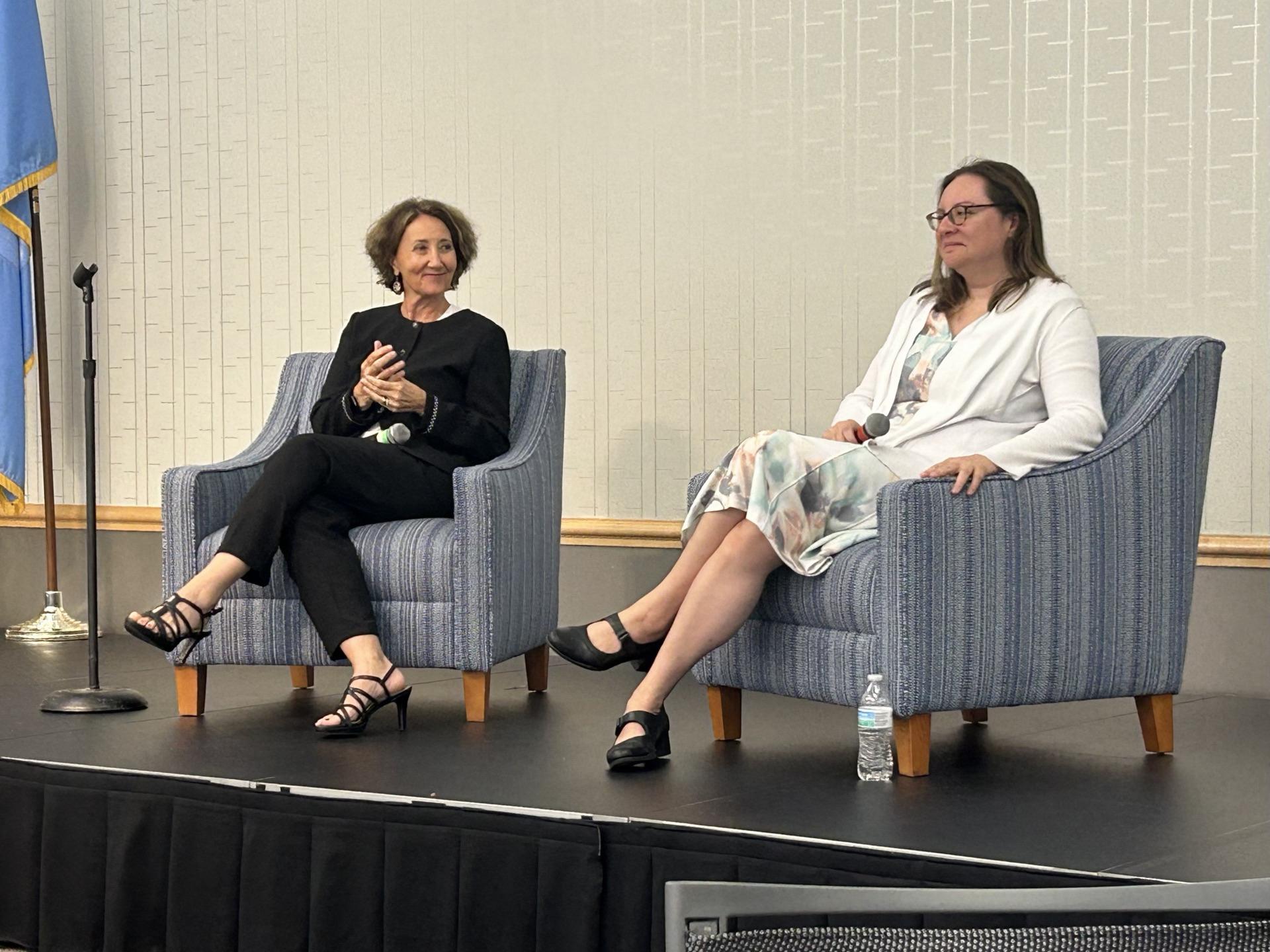
On Sept. 28, President Stacy Leeds gave her first “State of the University” address along with Provost Jennifer Airey. As always, this was an excellent opportunity for students to voice their questions or concerns directly to upper administration, while also providing a closer look at what might be in store for the campus in the coming years. Unfortunately, although there have been impressive steps by President Leeds in the early days of her administration, the State of the University left many questions troublingly unanswered.
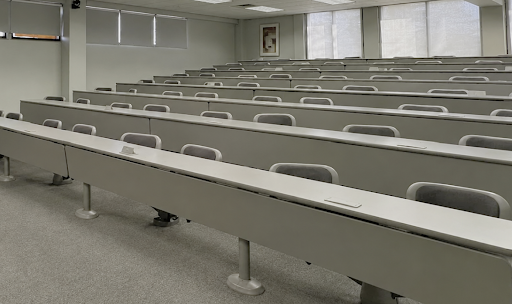
One concerning aspect was a major change in how the State of the University was conducted. Instead of being an open-mic event where students raise their hands, all questions had to be funnelled through a form accessed via a QR code placed on each table. Student Government Association President Bruce Bigler stated plainly at the start of the event that this was so that questions could be moderated for redundancy and appropriateness, and afterwards confirmed that same sentiment. “We did QR codes two years ago, and we got a lot more questions that way … so we figured that if we did it this way, we could kind of select the questions that were being asked better, and we tried to go for the most controversial, exciting, relevant question.” Sadly, however, many of the questions seemed to miss the controversial and exciting mark. For instance, there were many questions merely about Pat Case dining hours and the cost of a meal swipe there.
This is not for lack of interesting questions — senior Jules Yang reported that many of her questions (mainly dealing with the school’s contract with HR software-provider Oracle and its strong ties to Israel) were not presented to Leeds or Airey and had to be asked after the event had officially ended. It might just be that the question, among others, got lost somehow en route from the QR code to SGA President Bigler. However, the implementation of moderators is always going to raise questions over what types of questions do not get presented, especially when some of the unanswered questions have to deal with controversial political subjects. In order, therefore, to prevent any speculation over the possibility that SGA is censoring political subjects, they should move back to an open-mic setup. Even though, as Bigler noted, some people might be “hesitant to ask their questions because they didn’t want to feel like they were asking something controversial to the people who run this university,” this will allow for SGA to prove that the State of the University is truly a platform where all questions and concerns can be raised directly to upper administration.
The results were very mixed when it came to the actual responses given by Leeds and Airey. Leeds started by highlighting her quick action to cut the cost of tuition in half, which has generated much publicity all across the nation, with even Forbes publishing an article on the tuition drop. She also, once again, detailed her ambition to grow the student body at the University of Tulsa to 10,000 students across all programs (undergraduate and graduate, online and in-person) within the decade. Certainly these are admirable (if very ambitious) goals and Leeds should be applauded for them, but she wavered in other areas. When asked if she was aware of a divestment campaign that is asking TU to pull investments from corporations that support Israel, and if there were any plans to take action on that campaign, Leeds said yes. However, she then seemed to move the responsibility off to the Board of Trustees, saying that they are “heavily involved” in all such decisions, and ending by stating that this is a “bigger conversation” than ultimately she can answer alone. This is true; ultimately, the Board of Trustees holds the final word on what will happen to those investments, and not Leeds. However, for students who do care deeply about the university investing ethically, this is a worryingly meaningless answer from Leeds, who said that she, someone students can directly reach and should be able to look up to for action and change, can do nothing.
Airey had a similarly worrying answer when asked about the campus bookstore. In a move which left many students still without books, the campus bookstore switched to Barnes and Noble as the textbook provider for TU right before the start of the semester. But when asked whether a change would occur, Airey said no because “Barnes and Noble gives us flexibility for the faculty to elect paper books.” And because that flexibility is something that teachers are “happy” with, there will be no changes next semester. Paper books are incredibly important to how many faculty, especially ones who teach courses in the humanities, want to teach their class — that is, if they come in on time, if at all. Airey mentioned neither the book fiasco still currently affecting many students nor any plan to fix it for the future. As a result, the student population should have no reason to believe this will not happen again.
When asked about budget cuts and how that might affect faculty and course offerings, Leeds started with an explanation of how a university’s finances work and then said that any cuts that might happen will hopefully be done so that students “don’t feel” them. Afterwards, she clarified that budget cuts have happened, mostly focused on presidential programming, but she did not specify how that might affect faculty or course offerings. Unfortunately, Leeds’ answers do little to address the fears of students, precisely because many students already know about the university’s financial difficulties. They understand the large deficit TU has, and therefore have great concerns about how the university is going to address it. There may be uncertainty on Leeds’ part as to what the effects of budget cuts might be, or what other budget cuts might need to happen in the future, but even in that uncertainty Leeds’ primary goal ought to be to allow students to see and take comfort in a clear plan for the university. And ultimately, Leeds’ answers did not help ease the concerns of students who are anxious over the university’s finances.
While the State of the University was a great forum where many students were able to ask their questions directly to Leeds and Airey, the problematic setup and the fact that some of the most important answers were filled with vague promises left little comfort. In the next semester’s State of the University, students can only hope that there will be improvement in both how SGA runs the event and in the answers upper administration gives to the students.