News coverage is dominated by the results, while the electoral process remains overlooked.
In the wake of the 2026 midterms, conversations about the election tend to center around the results and what they mean for the future of American politics. While the results deserve scrutiny, so does the process through which those results are decided. In Oklahoma, the absentee voting is a cumbersome process that has made voting less accessible for residents. Any democratic form of government values the participation of its citizens in the electoral system, and Oklahoma’s absentee process raises an important question: Why does exercising a basic civic duty have to be so difficult?
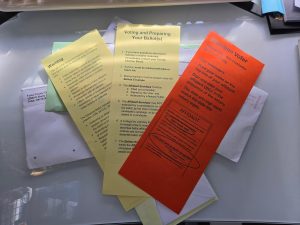
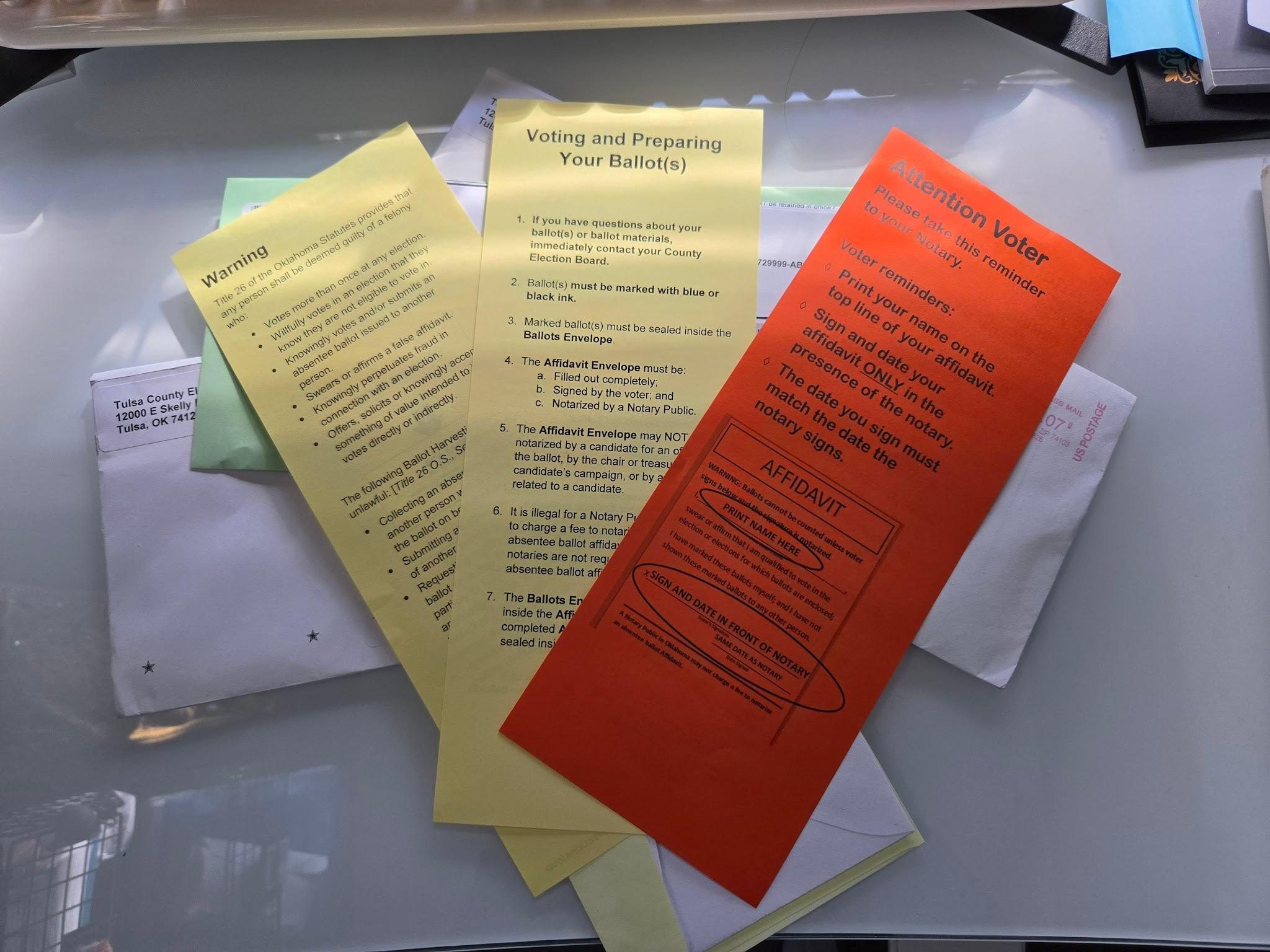
Absentee ballots provide citizens who cannot vote in person with an essential alternative. Still, the process itself comes with its own set of obstacles. According to the National Conference of State Legislators, Oklahoma is one of three states that requires absentee ballots be notarized before they are mailed. Notarization, combined with the cost of postage and the state’s ballot receipt deadline of 7 p.m. on election day, makes voting unnecessarily burdensome both financially and in time demands.
For some voters, these requirements might be a minor inconvenience. For others, they can become a barrier that makes participating in an election considerably more difficult, and in many cases even prevent them from voting. Many college students who are registered to vote in their hometown are unable to go home to vote due to work and school schedules, making absentee ballots the only feasible method of voting for them. In a small survey conducted among 14 Oklahomans aged 18-29, 100% of respondents said that notarization makes voting less accessible, and half of the respondents said that it was hard for them to vote via absentee ballot.
Ella Calvert, a junior double majoring in both economics and media and communications who voted absentee in both the 2024 presidential election and 2026 midterms, experienced these difficulties firsthand. “I’m registered to vote in Payne County, but my schedule was really busy at school, and I did not have time to drive down to Stillwater the day of … and I’m so glad I had that ability to vote by mail,” she said. “After you fill out the absentee ballot is when the hard part comes in, because you have to get it notarized.” Calvert made several trips to the list of notaries publicized by the Office of Civic Engagement until she was able to find an available notary, who also gave her the required postage. “Finding a stamp would be an additional hurdle to get over, but I think by far the toughest part about absentee voting in Oklahoma is getting a notary.”
Jake Milroy, a senior anthropology and geographic information systems double major at the University of Oklahoma and the son of a former TU adjunct professor and alumnus, has a similar perspective. “I had to pay $16 for stamps because I could not just buy one where I bought them. That’s about two and one-fourths hours of labor at Oklahoma’s minimum wage, by the way,” he said. “I am lucky to have that kind of free time to spend on finding notary services for my ballot, but many Oklahomans do not, and they deserve to vote as much as I do.”
Although Calvert and Milroy were able to cast their ballots, their experiences show how a process meant to make voting more accessible actually introduces more complications. Not every voter has access to a university campus that provides notary services, the flexibility to visit multiple locations at different times or the resources to provide postage. For Oklahomans who are travelling, working multiple jobs, experiencing mobility issues or already disillusioned with politics, the absentee process can be too difficult to manage.
Korbin Shahan, a junior political science and economics double major, described how the requirement was particularly onerous for people with limited mobility. “My grandmother, for example, lived alone for about a year while she wasn’t driving. So we either have to go pick her up to go to the polls, or she’d have to get an absentee ballot, and then we’d still have to take her to get it notarized, so it just doesn’t make sense,” he explained. “If you’re having to do an absentee ballot, there’s something preventing you from getting to early voting, there’s something preventing you from going to the polls … and you may not always have access to a notary wherever your ballot is sent to.”
Requiring notarization is supposedly intended to safeguard against voter fraud, which is important. However, the absentee ballot request already requires voters to provide identifying information, including their date of birth, social security number and drivers license number. However, security measures should be evaluated based on their effectiveness. The additional notarization is an unnecessary additional step to a procedure that already ensures electoral integrity through the request process. Lawmakers should consider which methods of identity verification are already present before requiring other verification.
In a Republican controlled state, one wonders if the measure was meant to improve election integrity, or to disenfranchise voters who would have voted for the other party. According to an article published by PBS, more than three dozen voting laws have been passed in Republican-controlled states. These laws include changes to ID and proof of citizenship requirements. This includes Oklahoma, which recently adopted state question 846 in the August 2026 election. This state question requires proof of identity for all authorized methods of voting. This measure was not only redundant, given that Oklahoma already has voter ID requirements, but also gave the Oklahoma legislature the authority to set restrictive requirements like those proposed in the SAVE Act.
Laws that require more verification of identity and eligibility in an already secure election system serve only as another burdensome step in voting, which ultimately disenfranchises and discourages voters who already find it difficult to vote. In light of President Donald Trump’s push for more restrictive rules and his false claim that the 2020 election was stolen, voting rights are once again in the spotlight. Regardless of the motivations behind these policies, their effects on eligible voters deserve scrutiny.
The right to vote should not be a partisan issue. Every eligible citizen should have the opportunity to participate in the democratic process without unnecessary obstacles. Election security is important but should never come at the cost of accessibility, especially when, as shown in an article in the September 2026 edition of the Human Rights Magazine, there is no evidence of voter fraud occurring. Systems like Oklahoma’s absentee ballot procedure require voters to navigate hurdles that risk discouraging participation, especially among those who already find it difficult to get to the polls. Lawmakers should focus on making voting easier for every citizen, and Oklahoma should strive for a system that protects election integrity while making sure that no one is deterred from exercising their democratic right. While the midterms are over, the push for increased voting accessibility should not be.