

The tide of the University of Tulsa is changing — will it raise all ships?
Change is always a curious thing. In the moment of happening it is misunderstood and in retrospect it is critiqued; more often than not, change is most favorable before it happens. Yet, change is omnipresent — a tide and landscape of life. The current landscape of the University of Tulsa is no exception: President Stacy Leeds has committed to increase the undergraduate body from 3,000 students to 10,000 students in 10 years. Moreover, tuition has been reduced for current and future students from $54,000 to $25,000 annually, effective fall 2027. These tactics, in tandem with a three-year hiring freeze, have been initiated by the university to reduce the hindersome $130 million immediate deficit. Thus, TU’s leadership — chaired by the Board of Trustees and President Leeds — has instituted the changes, incurring the reactions of students, faculty and administration alike. The question then becomes, how are our beloved faculty and administration viewing such change?
Dr. Denise Dutton, professor of philosophy and religion, shared this sentiment upon being asked the question, “Do you think the increase of numbers will sacrifice quality of education? Specifically, the 11-to-1, 9-to-1, student-faculty ratio?” As a former student and now a respected professor at TU, she recalled the moment in a graduate school interview when she realized that many TU faculty are respected nationally as the foremost scholars in their respective fields. This caliber of faculty leads Dr. Dutton to maintain that “the numbers 9-to-1, 11-to-1, or 18-to-1 in some of our own [honors] seminars [mean] we’re the kind of institution that prioritizes teaching without losing sight of the importance of scholarship.”
Dr. Jonathan Arnold — history professor, classical studies expert and Associate Dean of the Honors College — understands change well as an historian and 18 year faculty member at TU. When asked about the cyclical nature of universities, Arnold replied, “You know, in some ways, a university is a community, right? It’s like a city or a country or a state. And you see the same thing happening with, you know, with cities and countries and states where they have good times and bad times.” In this way, the financial state of TU becomes comparable to a wave, with troughs and peaks. It should be added that in any phase of a university’s life, there ought to be a shared priority for quality of education and never should this priority be sacrificed. For what is a university?
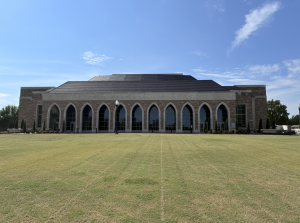
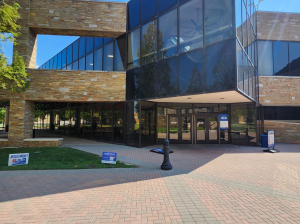
Dr. Arnold, in the context of discussing the appearance of the TU, stated that “TU is like a bad set of British teeth with veneers.” Curiously, this suggests that the university’s internal state does not always reflect its external image. Further, this is an honest view of TU; buildings that look pristine on the outside often suffer from age internally. Regardless of the “rollercoaster” that TU may be, Dr. Arnold maintains that the model of our university is “private [and] still elite.”
Another perspective from the history department with more than 30 years of continuous teaching experience, Dr. Thomas Buoye, maintains that regardless of financial hardship, “somehow TU carries on.” As an historian and professor of Chinese legal history, Dr. Buoye seconds Dr. Arnold’s reverence for quality education: “I see my job as eradicating ignorance.”
Senior Director of Financial Aid Vicki Hendrickson states that TU is fundamentally “energizing. … They are the future leaders of our nation.” However, when asked how TU is expecting to prevent any lag during the process of increasing the student body while maintaining a quality education and adequate housing and dining, she assured that no singular funding center — donors, students, grants, or the endowment — will shoulder the brunt of financial and enrollment changes. Change, it should be remembered, is also an indicator that the leadership of this university cares enough to enact that change with the goal of betterment.
Irrespective of whatever institutional changes may occur, the foundation of any university exists with the people in the classroom and the instructors. Everything else is a superstructure in relation to the fact that TU is fundamentally — as Dr. Dutton voiced — “a place where minds get to meet.”