Red Oklahoman voting populus shows a remarkably blue underbelly.
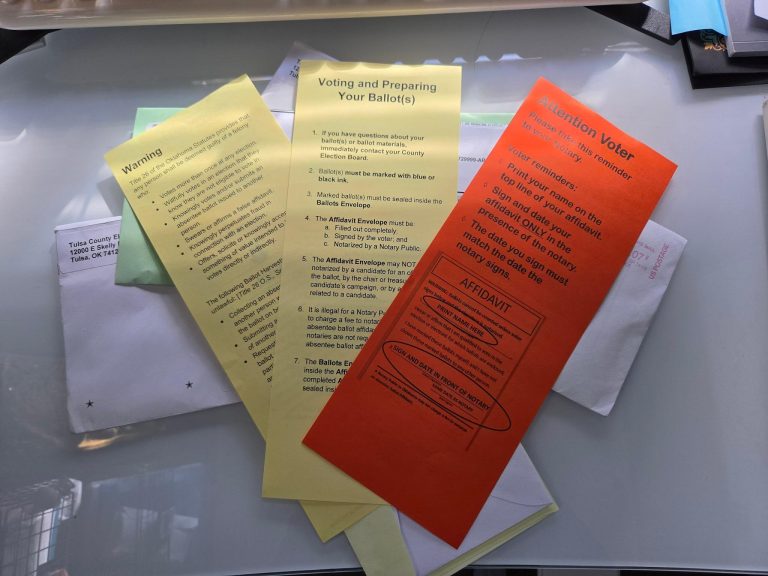
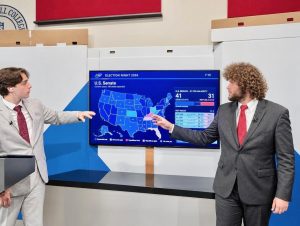
This past Tuesday, Nov. 3, featured one of the most consequential midterm elections in recent history. During a time in which Republicans are the controlling party in the national government, Democrats flipped seven seats in the Senate (with the two currently uncalled races in Mississippi and Alaska also likely going Democrat) and 42 in the house, with 16 elections still uncalled. This “blue tsunami” can be seen in states like Texas, Ohio, Iowa, Kansas, Maine and both Carolinas, all of which elected Democratic senators in districts that had previously been held by Republicans, with many also voting for Democratic governors over their incumbent Republican counterparts. Unfortunately for Oklahoma Democrats, it would seem upon first glance that this so-called “blue tsunami” is entirely absent from their state. However, this disappointment may be somewhat hasty.
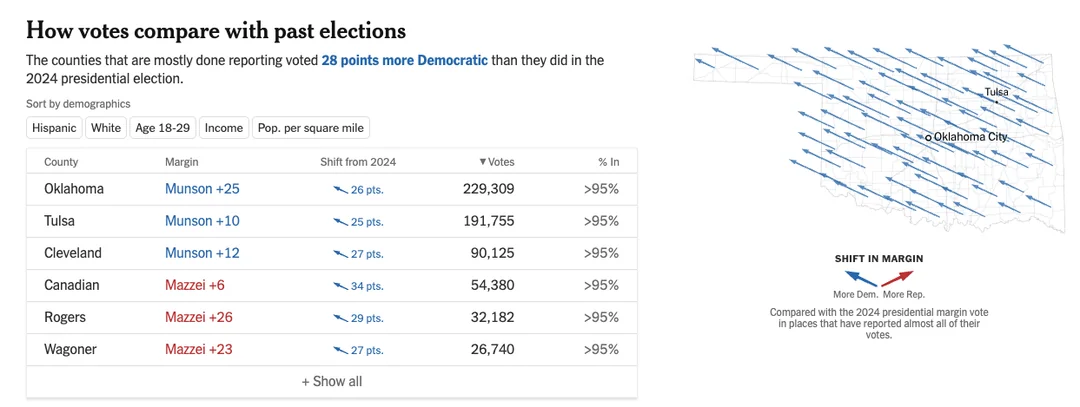
While the winners of the election tell the story of a one-sided Democrat bloodbath in Oklahoma, a closer inspection of the voting data paints a much different picture. According to the New York Times, counties in Tulsa on average voted 28 points more Democratic in the 2026 gubernatorial election than they did in the 2024 presidential election. Even though this shift leaves many rural counties still thoroughly red, the fact that every single county had a Democratic shift this election is quite impressive. Republican Mike Mazzei won one of the closest gubernatorial races in recent history, with Mazzei and Democrat Cindy Munson winning just under 52% and 46% of the vote respectively. While this close race is by no means a guarantee of Oklahoma going blue in the near future, it does provide promise that Oklahoma is capable of change.
Senior political science and media studies double major Jules Yang had a lot to say about this hope of change in a very red state. Yang grew up in a suburb of Houston, which she feels is often misrepresented: “I think something that a lot of people who are from the west or east coast don’t understand is that Texas and the south in general are not a conglomerate; there are always pockets of blue in every place in the south.” It would seem that in this election, the pockets of blue in Texas won out. However, this possibility did not always seem inevitable. “I started working on campaigns when I was 17,” Yang stated. “The other big campaign I worked on was Beto O’Rourke for governor of Texas in 2022, and that was a really brutal election. … And when you’re 17 and you’ve lived in the south almost your entire life, it starts to feel very hopeless.” For this reason, she said, “Tuesday was so special, because it’s like, ‘Wow, this is actually probable.’ … Actually having the statistics is just so magical to me.”
So what exactly does it take to shift the political landscape of a very conservative state like Oklahoma? According to Yang, “Beto O’ Rourke paved the way [in Texas]. … He repeatedly humiliated himself and lost and lost and lost, but I think being willing to put yourself out on the line and to show people that like, ‘Hey, we’ll get them next time …’ and to really go out and campaign is so important.” For this reason, it is crucial that Democrats in Oklahoma keep maintaining a strong presence in the elections like Munson did in this race. Showing up time and time again and being present helps to slowly build a platform over time. Eventually, this platform could lead to a successful election like those in Texas and many other places across the United States this midterm.
Low voter turnout likely played a role in the election, but it is hard to determine exactly what would happen if voter turnout were more comparable to that in other states. Professor of political science Dr. Matt Hindman explained, “In Oklahoma, we are frequently toward the very bottom when it comes to voter turnout. The fact that Oklahoma isn’t a very competitive state likely has something to do with that.” Hindman noted that attendance was likely down for both Republicans and Democrats. “As Oklahoma is a very Republican state, voters in our state were likely less motivated to turn out to vote than those in bluer states,” he said. “Polling in 2022 actually seemed to indicate a very competitive election for governor. … Munson’s race didn’t get the same level of attention. That might have played at least a small role in the state’s slightly lower voter turnout relative to 2022.” While a more competitive state might encourage more Republicans to show up to vote, the same could be true for Democrats too. Regardless, encouraging higher voter participation in Oklahoma is an admirable goal; ideally more than 45.67% of Oklahoma’s registered voters should be participating in elections.
Yang also noted that the policy choices of Texas Senator-elect James Talarico and Governor-elect Gina Hinojosa also likely played a big part, saying, “Leftists have learned from the Zohran Mamdani strategy to focus on what matters to people … like potholes, childcare, things that are important to everyone regardless of party. And I think to an extent Gina Hinojosa and James Talarico realized that was a winning strategy and they adopted it for Texas.” Focusing on issues like affordability could be a key issue that helps win the Democrats seats in Oklahoma too.
While Texas provides a great example of consistency and good policy paying off, sophomore biochemistry major and Wichita resident Luke Ternes feels that Kansas, while it too flipped a Senate seat, provides a pessimistic outlook on the future of Democratic politics. He feels that “the political situation is like it is in most places around America; bought out. Our mayor’s campaign was bankrolled by … a [Political Action Committee] founded by the Koch family, the richest people in Kansas.” While he was happy that Democratic Senator-elect Adam Hamilton beat Republican Senator Roger Marshall in the race, he said, “I’m too cynical to get my hopes up about Hamilton. … I wish he adopted a more left-populist platform which addressed the root cause of the affordability crisis, healthcare access, school funding, etc.” While the true policy and effectiveness of elected officials like Hamilton and Talarico will not be known until after they take office in January, the doubt Ternes feels shows that while Democrats might celebrate the ousting of Republicans from power, it is not enough to just elect those with whom you share a party affiliation. Rather, it is necessary to strive to elect those with promising platforms.
This principle also applies on the national scale. While leftists in Oklahoma saw very little local success in this year’s election, they saw plenty on the national stage. It is important to remember that getting people elected is only half the battle. These elected officials must be held accountable, not only to accomplish policy goals, but also to avoid making voters feel jaded and cynical like what has been done to Ternes in Kansas. As Yang recalled from a phone call with her neighbor after the midterms, “She told me, ‘Now that you know other things are possible, it means you have to work hard. Really put your money where your mouth is and hold your elected officials accountable for their promises.’” While it is understandable for Oklahoma voters to feel a bit of disappointment in the outcome of the elections, remember that the numbers both locally and nationally show hope for a better future. It is important that, no matter how things seem now, people stay civically engaged and do everything they can to fight for the future they want to see.