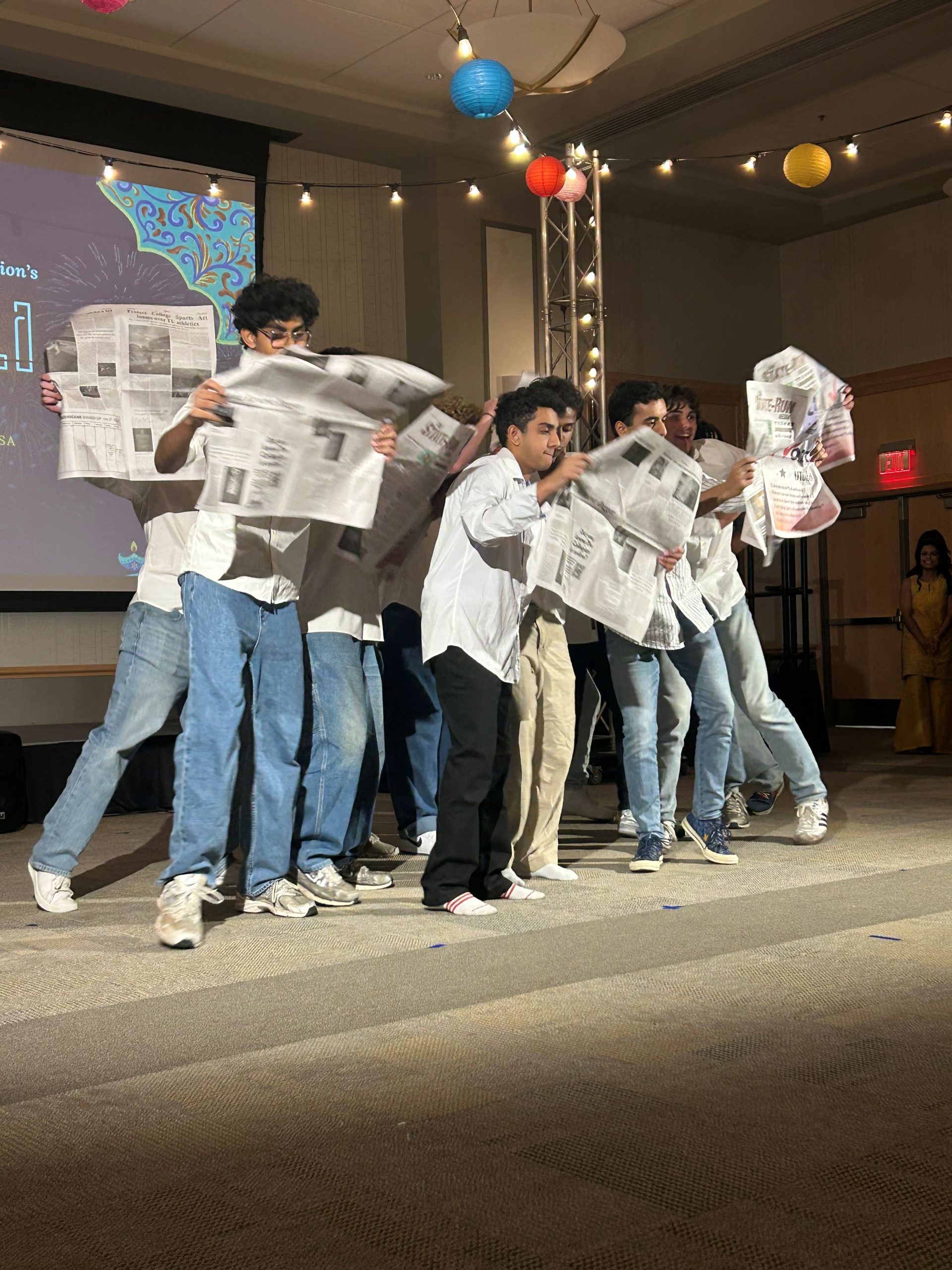
The annual celebration welcomed students of diverse backgrounds to experience Indian cultural traditions.
On Friday, Nov. 6, the University of Tulsa’s South Asian Student Association celebrated Diwali with an evening of traditional Indian cuisine, cultural activities and live performances, bringing students together in the Student Union. Originally scheduled to take place in Samson Plaza, the celebration was moved to the Student Union’s Alcove due to cold weather. The festivities started at 6 p.m., welcoming students to one of India’s most widely celebrated holidays.
Food served at the event came from local Indian restaurant Himalaya’s, featuring a variety of traditional Indian dishes, including biryani, chicken 65, naan, matar paneer and white rice. The selection offered attendees an opportunity to experience familiar dishes and explore South Asian cuisine. The food turned out to be one of the most popular attractions of the evening, with a plentiful selection allowing attendees to return for multiple servings. The plentiful supply allowed students to return for additional servings throughout the evening, making the meal one of the celebration’s most popular attractions. For sophomore Aadit Mehta, the food was a particularly memorable moment: “I gotta be real. Walking into the Union, the smell reminded me of real Indian food. When I saw they had chicken 65 and matar paneer, it made me so happy.”
Beyond the food, SASA provided several opportunities for students to engage with South Asian cultural traditions. Attendees could attend dedicated jasmine and henna booths, as well as a photo booth, adding interactive elements to the celebration.
The event also drew participation from beyond the South Asian community. Many attendees of different backgrounds wore traditional Indian clothing, contributing to the cultural atmosphere of the gathering. The participation reflected the broader campus interest in celebrating and learning about traditions outside of their own backgrounds.
At 7 p.m., the evening shifted toward a series of dance and musical performances showcasing different aspects of South Asian culture. The girls’ dance combined the Hindi Bollywood song “Aaja Nachle” with Jennifer Lopez’s “On The Floor,” followed by a group performance of “Naatu Naatu,” a Telugu song from the film “RRR.” SASA’s executive board also performed to Punjabi singer Diljit Dosanjh’s “Lover.”
The program incorporated more traditional forms of South Asian performing arts along with more modern songs and dances. Two classical Bharatanatyam performances highlighted a dance tradition originating in Tamil Nadu, while a Carnatic vocal performance introduced attendees to a classical music tradition rooted in South India. The program concluded with the boys’ dance, a Tamil mashup incorporating the pop band Big Time Rush and the song “Naa Ready.” Performers received multiple rounds of applause throughout the evening.
The festivities continued at 8 p.m., when students went to Samson Plaza to light sparklers, bringing the celebration to a close with a traditional display of light. This reflected Diwali’s purpose as the Festival of Lights, symbolizing the spiritual victory of light over darkness, good over evil and knowledge over ignorance. Students of all backgrounds came together, sharing in the lights of their sparklers.
For SASA’s Freshman Representative Sahil Patel, the event provided a meaningful opportunity to connect with the university’s Indian community while sharing its culture with the wider campus and local community. “It really means a lot to me, especially since it is my first year,” Patel said. “TU is a small school so the Indian community isn’t the biggest, but it was really amazing to see the whole campus come together in celebration of Indian culture.” Junior Aaryan Thavaran, SASA’s member coordinator, also reflected positively on the celebration: “I’d say both last year’s celebration and this year’s were successful, very successful indeed.”
For SASA, the celebration provided students an opportunity to share an important cultural tradition with the broader university community. The participation of students from different backgrounds demonstrated how campus events can create opportunities for cultural exchange and strengthen connections throughout the university.