


Tenure gone, shorter degree plans, and performance-based funding are all features of the Governor’s new plan
On Feb. 5, 2026, Oklahoma Governor Kevin Stitt signed two executive orders that will fundamentally change the college landscape in Oklahoma. The first was Executive Order 2026-06, which aims to eliminate tenure. The act states that tenure is to be phased out of all public universities, with the exception of the University and Oklahoma State University. They are allowed to keep tenure for their professors, provided that performance reviews are done every five years. However, this effectively means that tenure is over for them as well, as at any of those reviews a professor could be deemed to not fit certain standards and therefore removed.
Those standards, set down by the governor and the state’s regents of higher education, state that teaching effectiveness, student completion, job placement and economic alignment are what determine a professor’s excellence. In other words, it measures professors by the amount of money their students make, and it places the final authority of whether professors stay in the hands of the regents, who have to be reported that the executive order is being followed correctly.
Governor Stitt also signed Executive Order 2026-07, which implemented two other changes. The first is that 90-credit hour “accelerated” bachelor’s degrees are going to get a feasibility study. If the study comes back positive, then it seems certain that Stitt will order public universities to develop these degrees, which focus only on necessary major classes and cut back on minors and electives. The idea behind this is that it will help students get out onto the job market more quickly and, theoretically, cut the cost of a college education.
Stitt said specifically that this would “get students into good jobs” and retain graduates in Oklahoma, but did not elaborate on either point. He did, however, cite that increased enrollment at OU and OSU, specifically in the nursing program at OU, have helped to fill industry roles in Oklahoma. “We’re meeting workforce needs–that’s what higher ed[ucation] should do,” Stitt said, encapsulating the philosophy behind both of the executive orders.
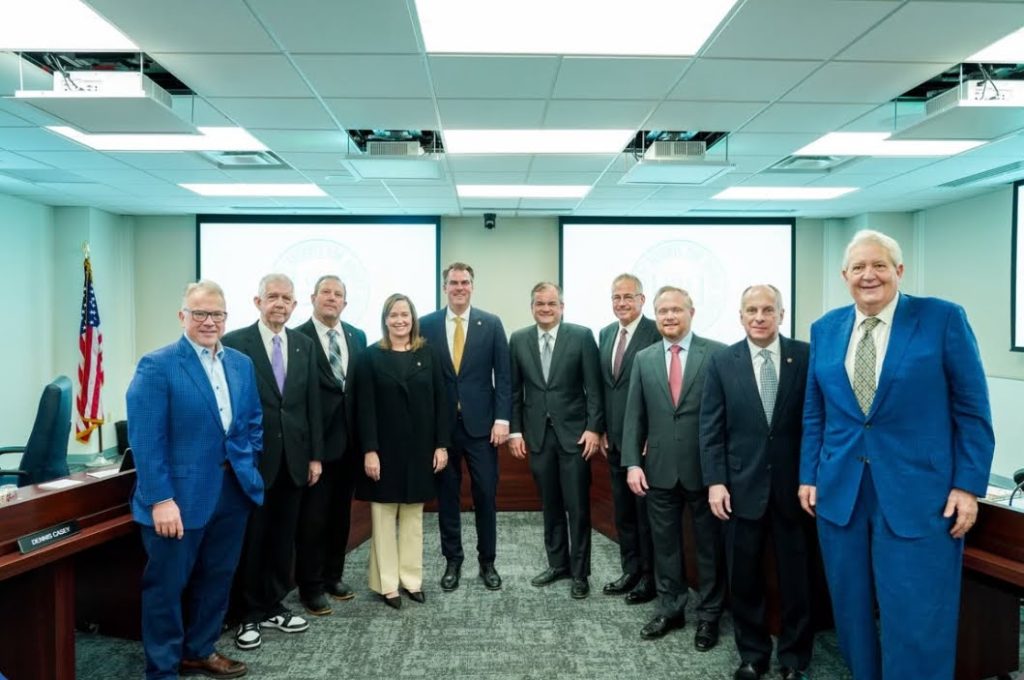
Stitt meets with the State Regents for Higher Education and states that their visions align in an Instagram post dated Feb. 5.2026. Photo courtesy of @governorkevinstitt on Instagram.
The other part of Executive Order 2026-07 was to change how funding is distributed from the state to public universities. It first authorized the regents to track graduates’ wages, jobs, hours worked and even where they live after graduation, citing “better return-on-investment analysis” as the reason for the increased data tracking. This data then allows the regents to divide funding based on economic viability of particular majors. The idea is that he programs which are deemed to lead to the highest-paying jobs will be given more money, while other majors that do not lead directly to wealth will get less. Furthermore, it directly authorizes the regents to use this data not just to distribute funds, but also to approve or discontinue programs or majors at public universities.
The University of Oklahoma and Oklahoma State University sent out emails to professors assuring them that the tenure process would not change, although community colleges and other regional universities do not have the ability to make those assurances. The American Association of University Professors condemned the act, writing to Stitt saying that it will severely cost Oklahoma in the highly competitive faculty job market. All of this comes after a contentious end to 2025 for Oklahoma higher education, as regents cut many degree programs, particularly at The University of Oklahoma.