



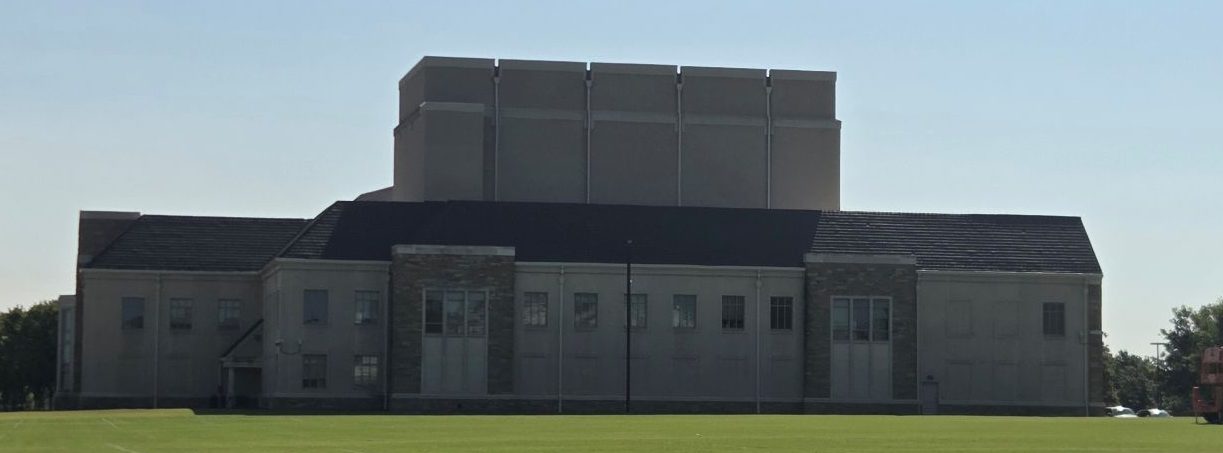
In an affront to the Tulsa community, the University of Tulsa bans students from Harwell Field at the behest of the football program.
The Tulsa community and student body returning to campus this semester were dismayed to find that a new policy enacted by the university now restricts the use of Harwell Field exclusively to the football team practices at all times. The football program has complained about the surface being torn up by other students on the field, particularly during the club soccer team’s practices, and wishes to redirect all other student activity to the Collins Fitness Center Field or Chapman Commons. Additionally, campus security appears to have been tasked with keeping students, faculty and community members off of the practice field — because the primary threat to security and safety on this campus is obviously students sunbathing and playing catch in a common recreational area.
The foremost complaint regarding the condition of Harwell Field, based on information given to the student body, is that club soccer practices are damaging the field. While it is certainly true that spaces used for soccer can be torn up by cleats, the rationale for offloading this burden on the general student body, rather than addressing the root of the problem, is flawed to say the least. Harwell Field is used by the TU community for a wide range of activities. These include, but are not limited to, fraternity and sorority events, events held by other student organizations, groups of students playing casual games and sports together, picnics and other ways of enjoying the weather in a beautiful community space.
In addition to the frequent gatherings, many students have had some of their closest relationships built through time spent together with friends on Harwell. “When I first came to campus, one of the first things I remember doing with other people was going out on Harwell and throwing a football or a frisbee around,” said Will Gonsior, a sophomore at the university. “It’s a great open space for students. The football team doesn’t need it when they’re not using it.” While a significant amount of care and work goes into maintaining the field’s condition, it is simply foolish to believe that sunbathing students are damaging the playing surface in any tangible way compared to the 100 football players and their cleats that occupy it for several hours each day. If the club soccer practices are truly affecting the football program in a negative way, then the athletic department ought to address it by moving soccer practices from Harwell Field, knowing a space for them will be found whether students are allowed on Harwell or not. To put this burden on the wider student population, however, by removing them from the space from which they have gained so much is unacceptable when their presence is clearly and obviously causing no harm of any kind to the University of Tulsa football program or Athletic Department.
The Collegian was informed on Aug. 24 by the campus security that the Athletic Department wishes to see the activities that previously took place on Harwell moved to either Chapman Commons or the Collins Fitness Center Athletic field. There are several problems with this proposition. Firstly, and obviously, the students who have been using Harwell have been doing so for a reason: it is either a better or more convenient location than any other place on campus. This may be for a variety of reasons. Harwell Field is in great condition for at least casual recreational activity, with shorter grass and a level surface. While this is also true about the CFC field, that venue is smaller, in a less convenient location for most students and less safe because of the frequent traffic in such close proximity; and it happens to be reserved nearly every evening when students are free for recreation. Besides the outside groups, such as youth sports teams and local soccer clubs that frequently reserve the space, it is also booked for intramurals during every weeknight for a significant portion of the semester. While intramurals are an excellent and valued part of campus recreation at TU, they do not appeal to everyone. They can be somewhat exclusive from a competitive standpoint, which creates the need for another recreational space that can be used casually without reservation. As for Chapman and Dietler Commons, they are not lighted, cutting short the hours in which they may be used comfortably by the community. During August and September, the hours after sunset are often the only ones during which the climate is friendly towards outdoor recreation, and, during the later months, darkness falls so early that many students scarcely finish classes for the day before the sun sets, greatly limiting the availability of Chapman and Dietler Commons as viable recreational fields. Harwell Field has long been the largest, best kept and most flexible space for students who want to spend time outdoors on campus, and the harm done by the decision to remove any and all students from the space during times when the football team is not even present is irreparable.
The football program has long had priority access to Harwell Field, and has never claimed to have been disrupted in any way by the activities of other students during their practices. To demand that the space be treated as exclusively theirs, when it lies in one of the most frequented parts of campus, separated in no way for their use in the way that every other Athletic Facility is, and has never in the past been treated as such, is neither necessary nor productive.
The manner in which this decision is being carried out is also disgraceful. The decision was made, in the first place, without any formal or informal announcement being made to the students or to the larger community. This attempt to hide from the legitimate feedback or criticism which obviously would have met such an announcement is a further affront to the students. The method which was instead employed, of sending the campus security officers to escort students off the fields who are hurting neither the field or anyone on it, is even worse. The operation requires constant attention, consuming considerable amounts of the officers’ time and effort which could be spent addressing actual threats to campus security, and gives a false impression that the university cares more for the preferences of the football coaches than the actual safety of its students.
Harwell Field has long been a beloved community space in which students have made memories and built relationships that will last a lifetime. It is the only common space that serves the purpose that it has in the past: being available to anyone at almost any time and suitable for almost any recreational activity. It is clear how much harm is being done to the TU community by this action on the part of the university and the Athletic Department, and to the environment of inclusivity and welcome which is intrinsic to the identity of TU, without providing any tangible benefit to the football program. We can only hope for continued dialogue and willingness on behalf of the Athletic Department to rectify this wrong and continue to share access to Harwell Field with the student body at large, as they have long done and which, going forward, they ought to do.