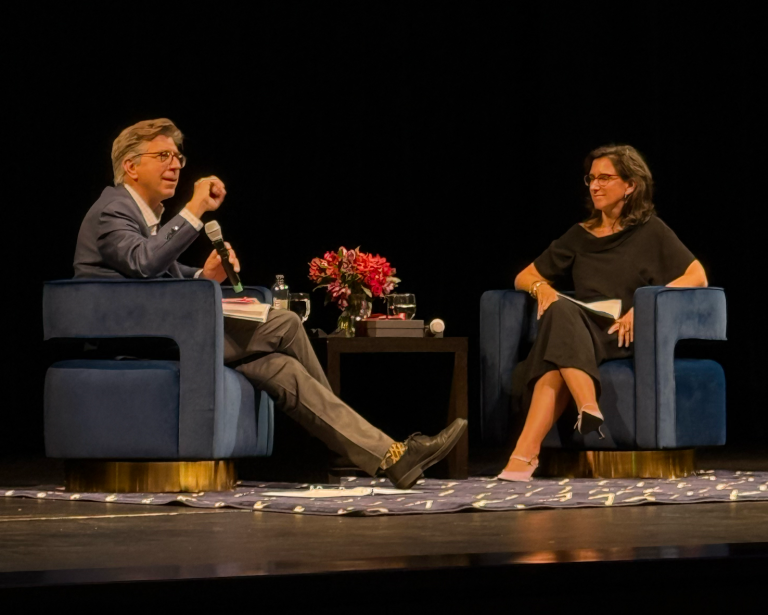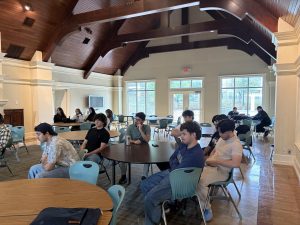
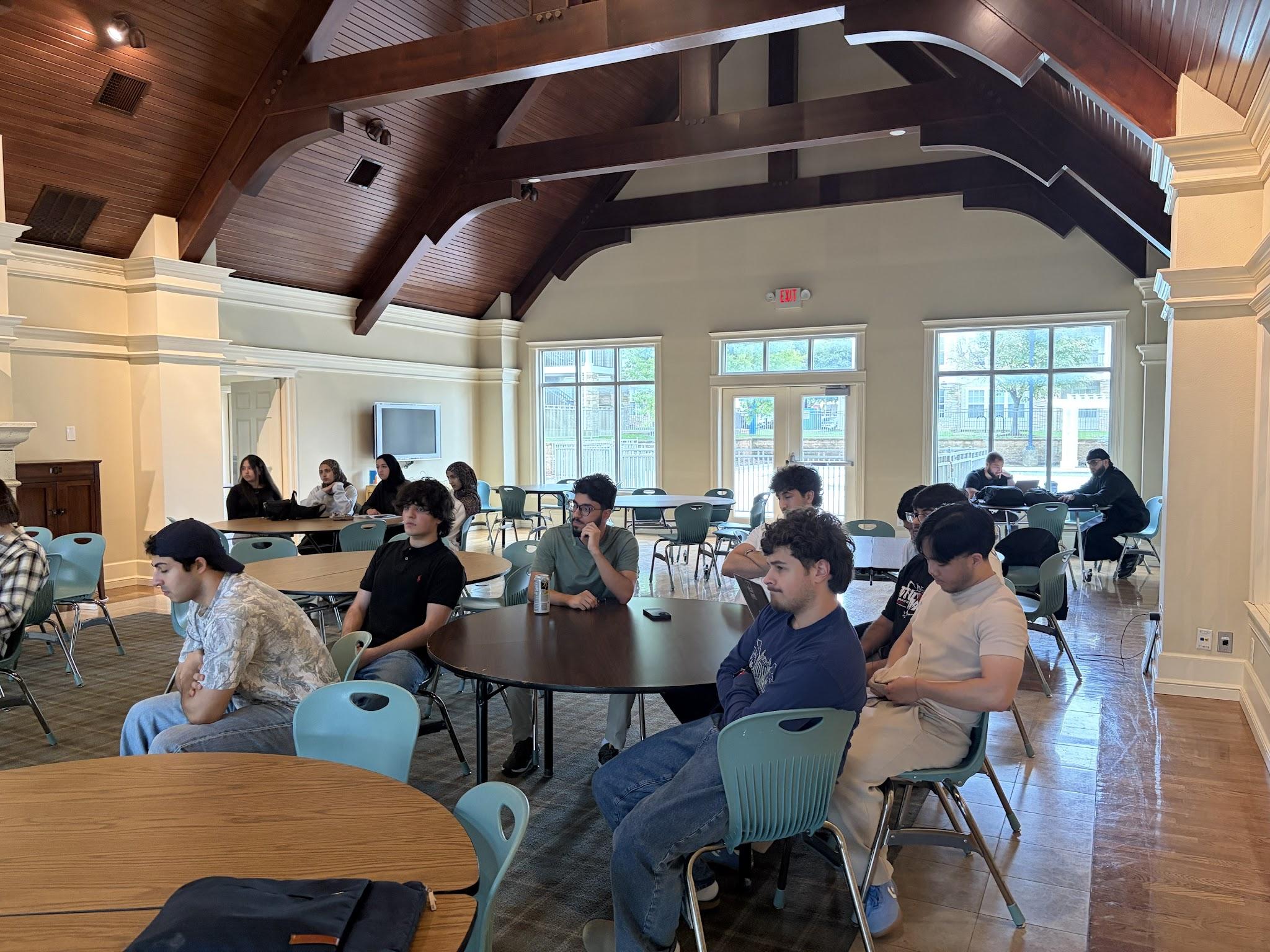
Various speakers delivered lectures and a Q&A at the Mayo Activities Center.
Over fall break, on Oct. 15, social media influencer and Oklahoma State University medical student Yusuf Hasan, along with other medical students from OSU, visited the Mayo Village Activities Center to deliver a lecture on “Muslims in Medicine.” The discussion was well attended by both Muslim and non-Muslim students, and focused on what operating in medicine looks like for someone attached to their faith as well as Medical College Admission Test preparation advice. Hasan, the main speaker for the event, has a significant social media presence where he assists pre-med students in achieving higher goals on the MCAT. The other speakers, Onan Ahmed and Tafsia Hasin, are medical students who also have an extensive background in MCAT training and spoke about their own paths into medicine.
The attendees came for a variety of reasons, with there being a decent mix of prospective medical students and others who were just curious about how Muslims navigate this field. Ahmed Sher, a senior in cybersecurity, stated, “A lot of people I came with were there for a more informational time. I came for the guidance on the topic as well, and I knew people there in the medical field too.” Myriam Mousa, a senior psychology and pre-med student, said that the topics were more relevant to her field, “I’m taking the MCAT sometime this academic year. … I found it pretty beneficial, and the advice from Yusuf Hasan should be helpful.” The speakers addressed both the medical and nonmedical students, and provided a space for attendees to ask their questions.
Much of the panel was spent on the Q&A portion, with one of the first student asking the speakers to describe the moment that the medicine path was solidified for them. Ahmed explained how the medical path was never an obvious one, with him originally being an engineering student, until a close family member falling sick made Ahmed reevaluate his priorities. Hasin took the mic next and highlighted her experience working with people at Hillcrest, “I loved working with the patients … and the patients seemed to like me too.” Hasan then began describing this type of life decision more generally, and how that question of why medicine also hits at the root of who you are as a person.
The speakers also detailed their experiences with the intersection of faith and medicine. Both Hasin and Hasan illustrated how prayers were a grounding presence during very difficult moments in their lives and helped them in achieving their goals. Hasan mentioned how reminders of humility from Islam kept him composed while he was managing the pressures of the medical field. “Without Allah’s bounties,” he said, “we wouldn’t be here. I reminded myself of that.” Additionally, Hasin also detailed the unique struggles of Muslim women in medicine. Whether its patients denying care or being rejected from certain opportunities, Hasin said that she had to learn to anticipate those moments rather than let herself be caught off guard.
Throughout the event, the atmosphere was generally informal while still remaining informative. Talha Choudhury, president of the Muslim Students Association and organizer for the panel, stated that “the environment was good, and I think the venue and setup just helped with all that.” He was not alone in thinking this; during the interview with Mousa she also mentioned that “it [the atmosphere] was pretty chill, definitely had more of that calmer, more intimate vibe … and there was free food.” Overall, the event struck a balance that is difficult to hit: very relaxed while also preserving the quality of the content being communicated.
The Muslim Students Association will be advertising for more events during the semester, and you can visit the events calendar to see if there are any happening that week. If you are looking for assistance on the MCAT, check out Hasan’s videos on YouTube.