


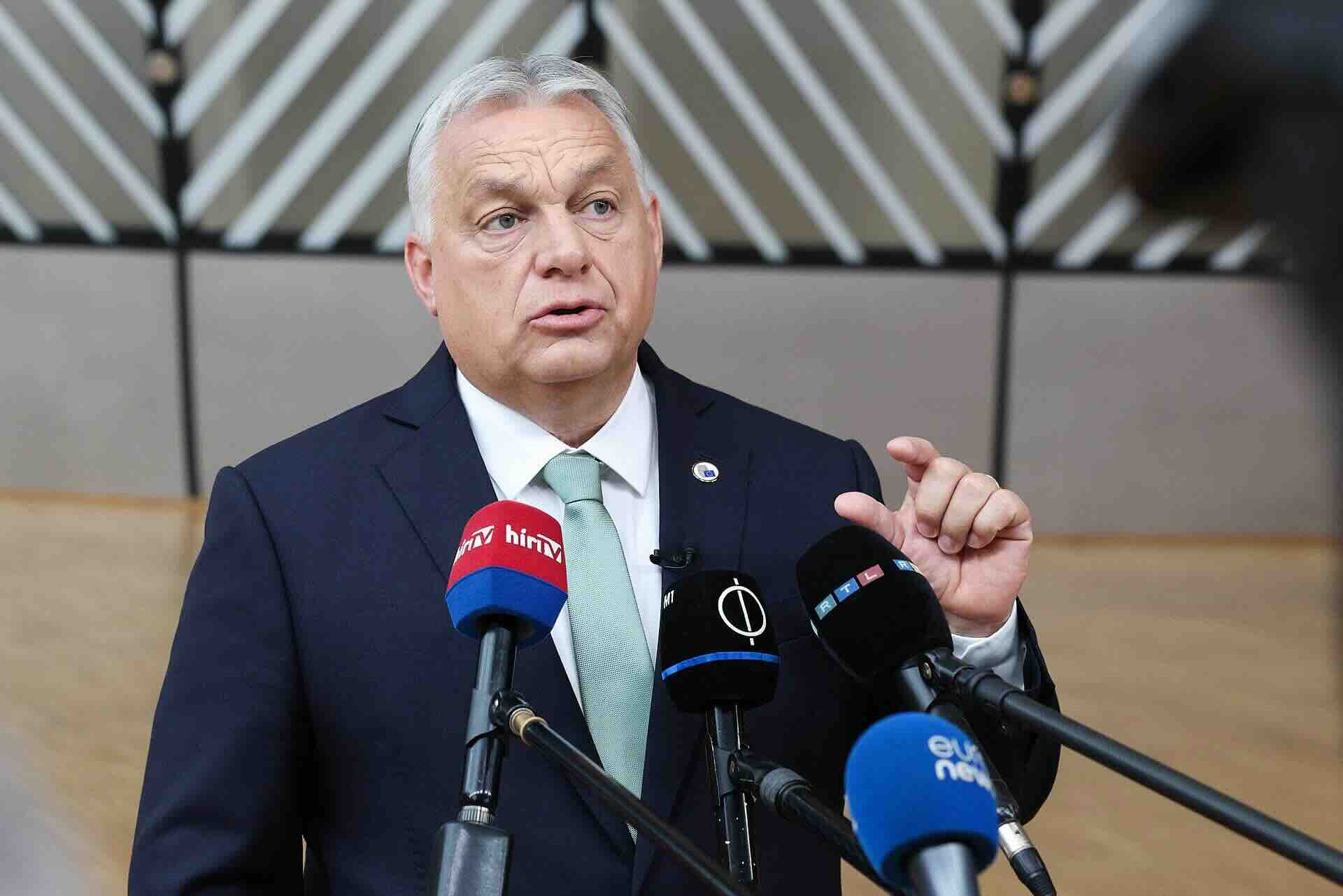
New Prime Minister Péter Magyar wins the Hungarian election after Vice President JD Vance’s failed endorsement in favor of Viktor Orbán.
Earlier this month, the now-former Prime Minister of Hungary, Viktor Orbán, lost in a historic defeat to opposition leader Péter Magyar, ending his 16 years in power. According to the BBC, Magyar’s TISZA Party took 141 seats against the incumbent Fidesz’s 52. This concludes a tense campaign season in the country, which saw intense messaging, the intervention of the U.S. Vice President and a possible false flag attack.
Throughout his almost two decades as prime minister, Orbán has accumulated a number of controversies that have made his recent electoral defeat notable. During his tenure, he had a notable feud with the European Union that spanned a number of issues. Politico reports that he had used his position in the EU to block or stall efforts on admitting new countries, sanctioning West Bank settlers and, most prominently, aiding Ukraine against Russia. He has also placed himself firmly on the conservative side of the culture war. During the Conservative Political Action Conference Hungary in 2023, he made several remarks rebuking the “woke movement” and “gender ideology, stating, “Hungary is actually an incubator where experiments are done on the future of conservative policies.”
Orbán’s firm positioning in the culture war was brought into the 2026 campaign season, with said campaign being home to scores of intense messaging. Fidesz attempted to depict its opposition as being war-mongers in the media, framing their warmer stance towards the EU as a way to drag Hungary into the Russo-Ukrainian War. The party accused Magyar of being a Ukrainian agent, as well as made hyperbolic posts on social media with AI that illustrated, among other things, Magyar saying he was going to hand over Hungarian factories to foreigners. They further tried to tie TISZA to the previously scorned “woke movement” despite TISZA officially being a center-right party.
One of the most high-profile events of the campaign occurred when Vice President JD Vance visited Hungary to show support for the former Prime Minister. In the days before the election on April 12, Vance attended a pro-Fridesz rally where he gave a speech endorsing Orbán and encouraging Hungarians to “stand with Viktor Orbán.” The results of this prominent endorsement, however, were not to the former Prime Minister’s favor. According to a Newsweek article published three days before the election, the likelihood of Orbán winning began to fall rather than increase after the vice president’s appearance in Hungary.
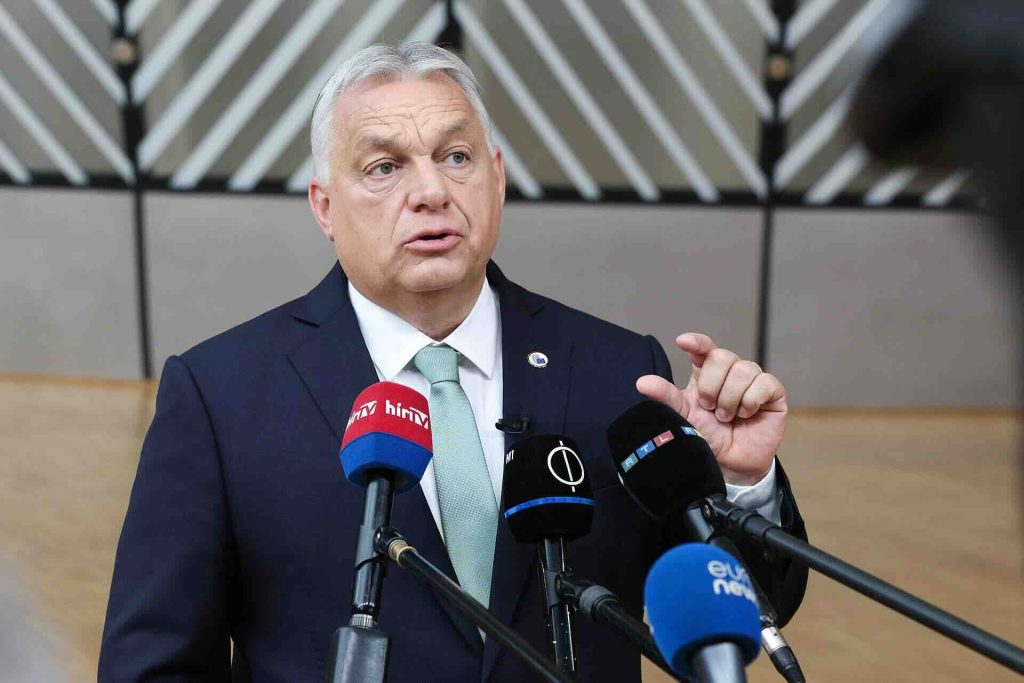
Viktor Orbán speaking at the Council of the European Union.
Courtesy of The Council of the European Union
In addition to everything else, just a week before the election on April 5, Orbán was accused of attempting to orchestrate a false flag attack to boost support. The Guardian reported that Serbian authorities had discovered explosives near the Turkstream Pipeline, which transports gas from Russia to Hungary. Magyar, in a post on social media, claimed that he had been warned that a possible incident like this would happen and that the plan had been carried out with Russian and Serbian assistance.
After an election as heated as this one, Magayar has the job of uniting a country with deep tensions residing in it. Even with a large majority in the parliament, the prime minister has great political divisions to overcome.