


Bugonia brings new philosophical questions to the science fiction genre.
Of the many critically acclaimed films from the past year I had the option of reviewing, my curiosity led me towards one I hadn’t heard much about. Bugonia, directed by Yorgos Lanthimos, wonderfully surprised me as a fan of science-fiction. Being a movie that, at its core, is a philosophical sci-fi disguising itself as a dark, absurd drama.
The film is a remake of “Save the Green Planet!” directed by Jang Joon-hwan, and centers on the fictional kidnapping of pharmatech CEO Michelle Fuller by two socially isolated conspiracy theorists. Believing she is an alien from the Andromeda galaxy, Teddy and Don’s plan sees them attempting to use Fuller in order to negotiate with the described alien species and end humanity’s cosmic enslavement. While seemingly bizarre on the surface, the story unfolds in a very thoughtful and intriguing way that allowed me to appreciate those surreal elements.
“Bugonia” also makes great use of its science-fiction foundation, infusing its more speculative ideas underneath the surface of an absurdist drama. Like many great sci-fi stories, the film utilizes its conceptual aspects to convey its deeper themes and rather than focusing on the spectacle of futuristic drugs and alien worlds, decides to use these elements to look inward and analyze very human experiences. Whether it’s the concepts of self-constructed realities, the victims of corporate malpractice, or the dynamic between social isolation and belief,
“Bugonia” is able to give particularly insightful reflection on these with its otherworldly lens. These science-fiction foundations also create a framework for the central conflict: the struggle between the two conspiracy theorists and the possibly deluded world they confine themselves to. This tension is communicated through the ambiguousness of whether or not Fuller is actually an alien, with the film deliberately leaving open that possibility and obscuring reality to the viewer, just like it is for Teddy and Don. It’s through “Bugonia’s” speculative and science-fiction elements that the film is able to explore these ideas with the full depth it does, utilizing these in very creative and impactful ways.
One character that has particularly stuck with me is that of Don, the autistic cousin and sidekick of Teddy. Throughout the movie Don shows signs of unwillingness with his cousin’s plan, even at some points almost calling it out for the absurdity that it is. These brief yet hopeful moments add to the tension felt throughout this work and ultimately become one of the most powerful threads in the story that has been circling my mind since seeing it this past week.
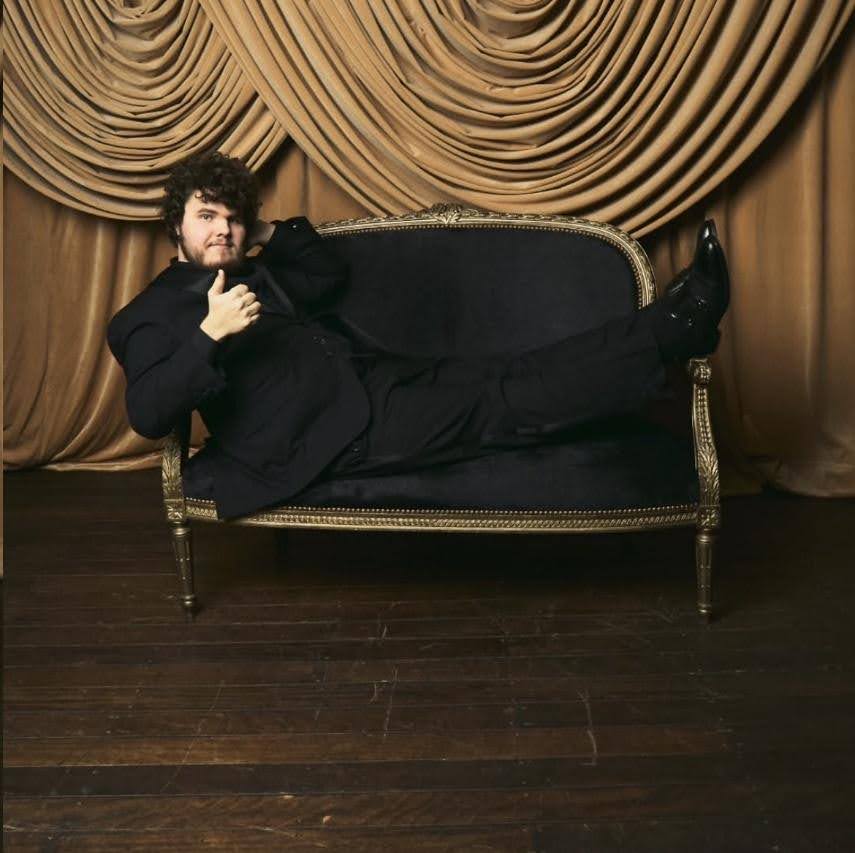
Aidan Delbis made his feature film debut in Bugonia. Courtesy of @aidan.delbis on Instagram.
Another aspect of “Bugonia” I enjoyed was the expression of each environment in the set design and lighting. The settings of the movie play a major role in conveying information about the characters and the thematic ideas. Such as with the bland corporate offices of Fuller’s company Auxolith, washed in bright, harsh lights and filled with glass walls and open spaces. This area communicates the corporate detachment of Fuller’s character and establishes the company as an unfeeling entity concerned with the appearance of transparency.
This film is nominated for Best Original Score, Best Actress, Best Adapted Screenplay, and Best Picture at the upcoming Academy Awards. I would highly recommend “Bugonia” to anyone interested in the many great movies made throughout this past year, especially to those who find themselves interested in the science-fiction genre.