

Despite Oklahoma citizens’ efforts, State Question 836 not to appear on ballot.
On Thursday, March 5, Secretary of State Benjamin Lepack announced that State Question 836, a grassroots initiative fronted by Oklahomans, would not appear on the November 2026 ballot. If passed, SQ 836 would have enabled open primary voting, in which every candidate, regardless of political affiliation, would appear on a single ballot. Then, the two most popular candidates would advance to the general election. The group dedicated to furthering the measure, Vote Yes 836, submitted over 200,000 signatures to the Secretary of State’s Office on Jan. 2026, exceeding the required 172,993 number to be successful. This week, the number of valid votes numbered less than 172,993 due to lack of verification against voter files.
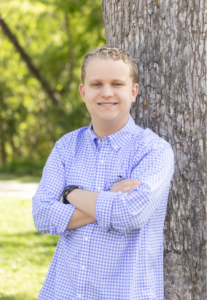
Tony Stobbe, an independent voter and advocate for Yes 836, told ABC News Channel 8 that though it was not passed, the support SQ 836 received proved how anxious Oklahomans were for change. “Over 500 volunteers collected signatures in winter storms and through the holidays because they believe all Oklahomans deserve a fair primary system that attracts more candidates to run for office, increases voter participation, and strengthens accountability. Their work has already produced a statewide recognition that our primary election system is broken.”
Supporters of SQ 836 argued that Oklahoma’s current partisan election system leaves too many voters without a voice. Vote Yes 836’s website argues that most races are effectively decided in closed party primaries. About 86% of elections were “rendered meaningless” because offices have already been decided by the time the general election opens. Additionally, independent voters, who make up about 20% of registered voters and whose tax dollars help fund elections, are currently excluded from primary elections unless the parties open their primaries to such voters, which the Democratic Party allows for while the Republican Party does not. With SQ 836, Vote Yes 836 argued, the system would become more representative, and Oklahoma’s voter turnout would increase. They believe candidates would be encouraged to appeal to a broader range of voters rather than just the small, highly partisan group that typically votes in closed primary elections.
Republican politicians disagree. Earlier this year, more than 90% of Oklahoma House Republicans and 97% of Oklahoma Senate Republicans signed a letter urging voters to “say, ‘No!’” to the petition. With SQ 836, a Democrat would have secured almost every gubernatorial office position won by a Republican in history because the general election would have been between two Democrats.
The letter claims that a true open primary system is not actually attainable. Instead, a “jungle primary” would reduce voter participation, citing California’s decline in turnout since they introduced a similar system. It also argues the system could limit voter choice by producing general elections between two candidates from the same party while making it nearly impossible for Libertarian or Independent candidates to advance.
Vote-splitting among many candidates could produce outcomes that do not reflect the overall preferences of the majority of voters. There were also concerns that an overwhelming number of candidates on one ballot would cause vote-splitting, which could produce outcomes that do not reflect the overall preferences of the majority of voters.