

This promise seems far too good to be true.
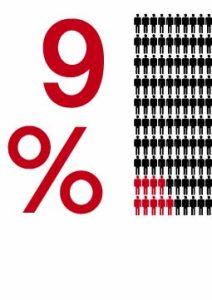
On Wednesday, Oct 14, President Stacy Leeds sent out a school-wide notice that the university had made the difficult decision to, between firing existing staffers and choosing to not fill vacant positions, reduce its staff size by 9%. In an email to students, she claimed, “No faculty positions were eliminated, and students should not be affected negatively.” In addition, in an interview with The Collegian, she further clarified that “only two of the affected staff members were directly student-facing. Those duties have been reassigned and should not impact the student experience.” This claim, however, sounds somewhat hollow. While the financial situation of the university certainly needs to be acted upon, and budget cuts and reduction of staff size were always going to be a part of that, the promise that such a cut will have no impact on the student body seems like a daydream more than the reality of the situation.
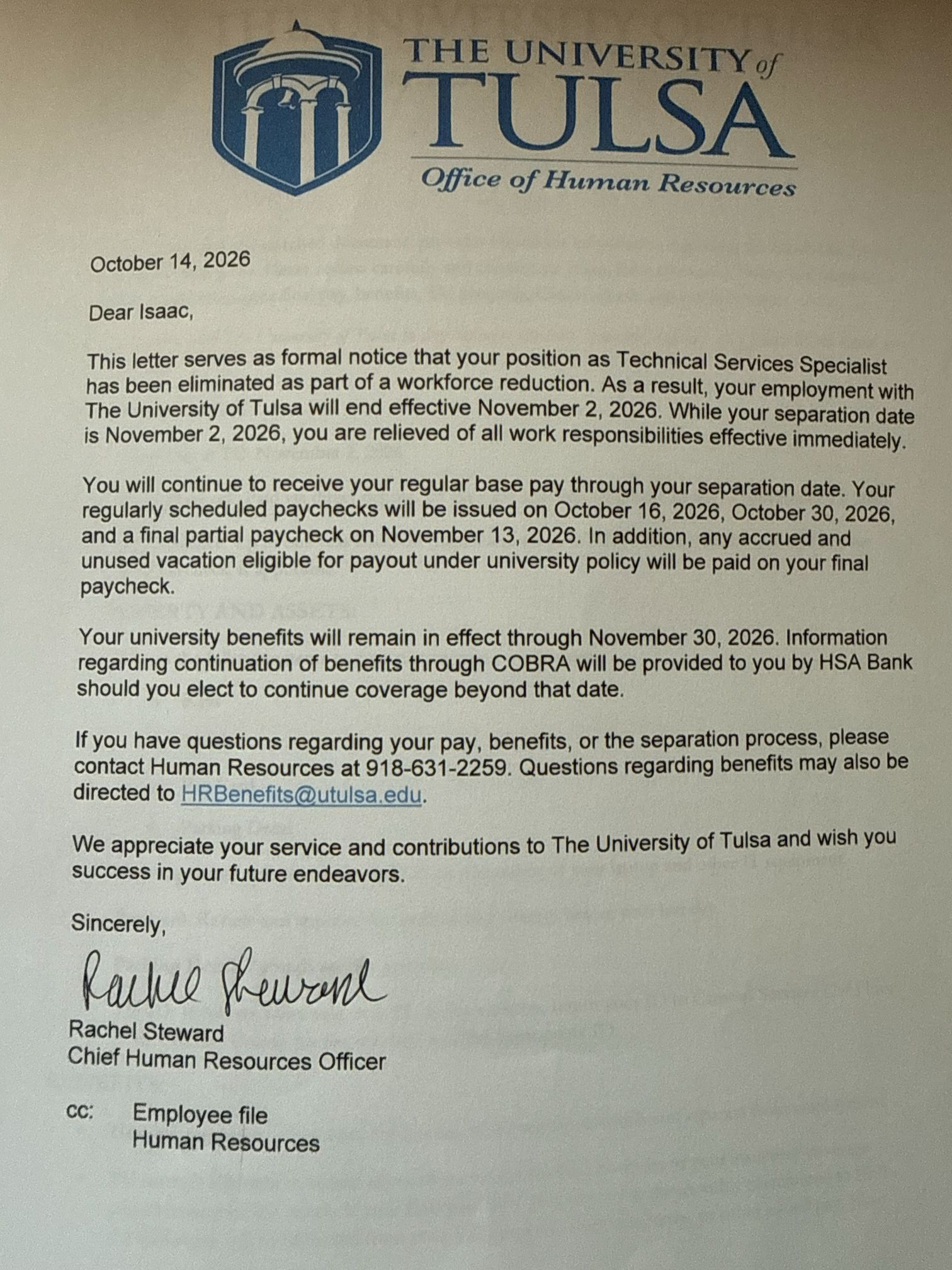
For example, one of the people included in the layoffs was longtime Lorton Performance Center employee Isaac Holton. Holton worked in the LPC since it opened in 2011, and was the assistant director of technical services there for almost a decade. While there he was in charge of all of the technical aspects of keeping the theater running like lights, sound, stage sets and more as well as training students to do those same things. When he was let go on Wednesday, Holton was one of two full-time, non-faculty staff in the LPC, the other having only been there for a few weeks. Because he is not being replaced, he expressed concerns, saying, “I’m not confident that there’s anyone there that knows how the building runs anymore.” Unfortunately, it would not be surprising to find out this was more or less the case. TU has a rough history with the LPC and theater at large — take, for example, True Commitment getting rid of many of the arts programs, from which TU has never fully recovered. While Holton’s termination does not directly affect any students other than those that worked for him, it is not hard to imagine how the student body as a whole could suffer from the absence of someone with his expertise working in the LPC.
Jack Parsley, who was previously a Student Success Coach and recently transitioned to being the director of orientation and transitional programs, was also let go. Unlike most other staff, though, he was given a few weeks to wrap things up because his job is so student-facing, only announcing his departure from the university on his LinkedIn account on Friday, Oct. 23. The loss of Parsley’s job position was not only a surprise to others, but also to himself. He told The Collegian that “it was surprising. There have been cuts in orientation previous to this, which had me feeling that, if we were already as barebones as an office [as we were] of one, my position was relatively safe.” Parsley’s confidence in his job security seems warranted: he fulfills a vital role in organizing first-year experiences on campus almost exclusively by himself, but now he is being let go without the intention of being replaced. Despite the lack of that role, Parsley commented, “I believe the program will continue. I believe there are no plans to not have peer mentors. … It’s not like they’re going to stop teaching the FYE [first-year experience] class, and I really doubt they’re going to stop having orientation.” It certainly is hard to believe that the university would remove those programs, but it was also hard to believe that they would remove the person in charge of running them.
Parsley showed concern for the future of first-year programs, saying, “Now — how it works without a central director in that position — I’m not aware of what that’s gonna look like.” Some peer mentors also expressed discomfort with the idea of Parsley being gone and no one replacing him. Junior biochemistry major Colin Sheehan vented that firing Parsley “just shows a level of cutting corners that this university is doing. … I think their entire shtick about ‘the student experience is so important to us’ … is the biggest piece of bulls**t ever.” When asked how he thought this would affect peer mentors going forward, he responded, “I think when you constantly fire the people that are in charge of the job, it leaves you in a state where you can’t ever really improve the program in a way.” He also was worried about a lack of central authority: “Jack’s job is a true position of authority, even if he’s just regurgitating what other peer mentors are telling him to.” Sheehan’s worries are very valid. Asking a group of college students without any kind of authoritative figure to figure out the FYE themselves seems like an accident waiting to happen.
It is also absolutely worth saying, however, that the fact that Leeds has to make these difficult decisions is not her fault, and she is doing the best she can with the mess she was given. Parsley confided that “I certainly don’t envy the position that our administration was in of having to clean up this mess that most of them were not involved in causing anyway,” and Sheehan shared similar thoughts when he said, “I’m not blaming our new president or anything like that, because obviously the university is sinking money-wise and needs to find something.” It seems that the decision to reduce staff size was not made lightly and that planning was somewhat thorough. Holton noted that he only had 45 minutes to gather his things after he was let go and had to schedule a later date to reclaim the rest of his things, both times under the supervision of campus security. However, he also mentioned that laid-off staff members had their official termination date pushed to Nov. 2 so they would have health benefits until the end of November. While Holton’s prompt removal from his office was a bit odd, the university still clearly put in effort to make sure that those it left without jobs were at least somewhat cared for.
The issue, then, is not that the university let go of people unjustly, but rather that it seems like the university has let go of somewhat critical positions with no plans to rehire them and only the broad assurance that “the student experience will not be impacted” to placate students. While Leeds said that “the reorganization includes plans for the creation of a new division on campus to focus exclusively on the student experience and ensure that student-facing functions are enhanced,” without any kind of concrete idea as to how such a division would function, students are left to wonder if things like productions in the LPC and the first-year experience will continue to be the same quality as they have been, or if Leed’s assurance is an empty promise meant to stop students from worrying about the rough patch the university is in.