

President Stacy Leeds cited a positive cash flow for the first time since 2021, but the elimination of staff positions has prompted concerns about how the university will maintain existing programs.
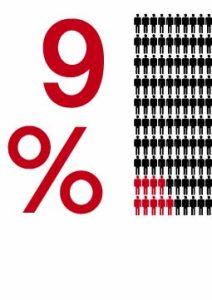
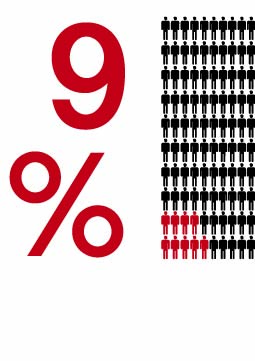
On Oct. 14, President Stacy Leeds sent separate emails to students and employees detailing “Current and Future Changes” at the University of Tulsa. The emails outlined a set of strategies intended to improve the university’s positive cash flow, the most significant being a reduction of almost 9% of its staff.
“We made the difficult decision to eliminate some staff positions and let several vacancies go unfilled, resulting in a reduction in force of just under 9%. No faculty positions were eliminated, and students should not be affected negatively,” Leeds wrote in her student-facing email.
In her email to employees, Leeds stated, “These staffing changes and other financial mitigations, including reduction in travel, events and discretionary purchases amounting to a total of $25 million in financial mitigations, have been achieved for the current fiscal year.” She acknowledged that while these measures would allow the university to achieve positive cash flow for the first time since fiscal year 2021, it still faced more than $90 million in short-term debt.

The workforce cuts are part of a broader restructuring of the university to reduce unnecessary spending by streamlining operations and eliminating redundant roles. Student experience, academic enterprise and administration will be three divisions of the university’s organization. “Administrative changes include a substantial reduction in the number of direct reports to me. I will double down on my efforts to be even more engaged in external partnership building and donor engagement,” Leeds wrote.
Student experience is also being prioritized. Leeds told The Collegian that “part of the reorganization was designed to build out extended support for the student experience based on direct feedback from students.” However, when The Collegian asked for specifically how student-facing support would happen, Leeds did not provide clear examples. “We will work directly with students on the design. We heard from students at the recent town hall and in other conversations that there are opportunities for improvements, and we want to be a university that is best in class in our attention to the student experience.” The email explained that the “organizational details of this new structure” would be finalized within the next few months.
For some, the layoffs have raised questions about the university’s prioritization of existing programs. Isaac Holton, assistant director of technical services, had worked at the Lorton Performance Center since it opened in 2011. His self-proclaimed responsibilities included training students, overseeing builds and troubleshooting technical systems for events. On Oct. 14, Holton was told his position was being eliminated. He was given a short opportunity to collect belongings and sign out of computers, before being escorted out of the building. Holton was told he could return at a later date to collect more belongings, which he did. In both instances, campus security was present.
Holton expressed concern about the future of the LPC. He did not think there was anyone currently employed who understood his role. “I’m not confident that there’s anyone there that knows how the building runs anymore.”
Leeds told The Collegian, “Affected staff members will be paid through Nov. 2, regardless of their final day of work. They will receive a payout of any accumulated PTO, and they will retain their employee benefits through Nov. 30.” Holton confirmed these arrangements.
One of two student-facing positions affected by the cuts is Jack Parsley, director of orientation and transitional programs. Parsley stated, “It’s the situation that we’re in. We’re making some really hard decisions, and these are decisions to keep the lights on and keep the doors open. … I recognize that there’s, you know, there’s no easy cuts in this situation.” He said that the administration explicitly stated that his position was eliminated, and so he wasn’t technically fired.
Parsley was also informed of the decision on Oct. 14, but waited until Oct. 22 to tell the students in the peer mentor program he oversaw. He had been promoted to his role by the previous administration and served in the position for less than half a year. His departure follows other staff turnover, notably, previous Director of New Student Programs Kyle Meador. The peer mentor program has already experienced several changes in the interest of financial prudency, including contracts that now only extend through December — one semester instead of two — and a decrease in pay for the student mentors.
Sophomore political science major and peer mentor Parker Wheeler said, “Honestly, it is very disheartening to see such a vital program at the university be affected in this way. … I understand that TU is going through budget cuts; however, I do not think this is a good look on the university when being marketed to prospective students. … I believe most students, and even faculty, on campus will agree with me when I say that we all need more transparency on the major decisions that affect our day-to-day campus life, not just a broad email that explicitly states that ‘students should not be affected negatively.’” The elimination of positions like Holton’s and Parsley’s have left questions on how the existing student experience will continue moving forward.