

The Interfaith Dinner provided a space for members of various on-campus faith organizations.
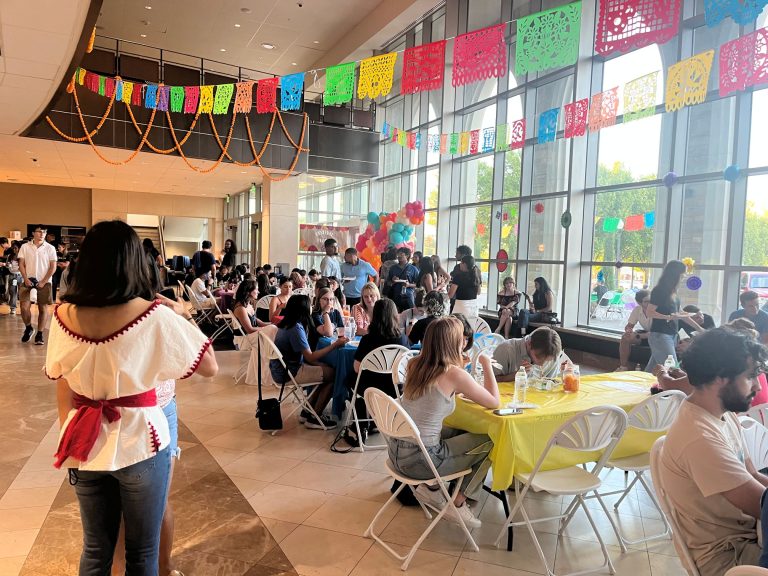
The annual Interfaith Dinner took place on Monday. Representatives from numerous on-campus religious organizations and individual faiths gathered to share a meal and have pertinent conversations about the importance of faith in students’ lives and the importance of interfaith conversations on campus. The event was organized by student leaders Lilah Jacobs, Sophia Rehman and Anagi Pieris alongside Sharp Chaplain Dr. Francis. Students and faculty enjoyed a Mediterranean meal alongside speeches, presentations and performances from members of the campus community.
The combination of speakers and demonstrations served to illustrate the rich involvement of TU students in diverse faith communities and networks. In his opening, Reverend Francis reflected on “the life of the mind and the service of God” as the guiding principles of his involvement with the Reformed Leaders and Scholars. The intersection of study and faith was reinforced throughout the evening, along with the sense of community developed by people sharing and respecting their distinct faiths.

Dean Blaine Greteman of the College of Arts and Sciences described interfaith conversations as “an incubator for a healthier student society,” and Dean Jennifer Frey of the Honors College emphasized the importance of recognizing “that we are all at the end of the day seekers of truth.” Sophie Rehman, student organizer and president of the Interfaith Club who gave a speech about how interfaith inclusion and respect are at the heart of her Ahmadi Muslim faith, gave perhaps the most succinct explanation of the evening, saying “Diversity is a divine design.” Certainly, a degree of intention was palpable in a room where students were able to connect, across linguistic, cultural and dogmatic differences over their shared belief in something greater than themselves.
Dr. Miriam Belmaker of the Anthropology Department gave the evening’s keynote presentation about her archaeology work in Israel, through which she aims to build community and bridge gaps through a shared scientific effort to discover the history of the region. She discussed the involvement she gathers from local schoolchildren to participate in her research, reflecting that “knowing our past is where it all begins.” She expressed a deep connection to her Jewish community both on campus and more broadly, which guides her life and work.
Other student presentations and demonstrations illustrated the richness of faith organizations and events on campus. Student representatives repeatedly emphasized the community that faith groups have brought them. The Newman Center sang several Latin hymns and the Baptist Campus Ministries performed a worship song. The Russian Culture Club hosted a performance of a beloved Russian song while passing out various candies and sweets. A room full of music, food, laughter and light was exactly what was needed during a dreary February week.
After a brief discussion about similarities across faiths moderated by the student leaders, all attendees were encouraged to write down a prayer or dream to attach to a Hope Tree on their way out of the event. Having a unifying action of pointing down solid hopes and dreams for the future was a wonderful and poignant way to wrap up a night of pertinent dialogue. The respect, celebration and open conversation of Monday evening would do campus a lot of good if extended into TU’s future.