

TU’s Music Department shines light on an overlooked composer.
I arrived at the LPC at 6:30 PM on October ninth, well before the doors opened. The center was silent and sparsely occupied. When the doors did open, it was surprising at how many people were also there early — maybe not many, but more than expected. I was even more surprised as attendees slowly trickled in to the point where the small auditorium was completely packed by the time the performance began, a pleasant sign as to the community’s valuation of the arts.
The Department of Music opened this semester’s Concerts with Commentary series with a piece by a relatively unknown composer, Mieczyslaw Weinberg. Well, that’s not entirely accurate — it actually began with a short excerpt of the far more famous Dimitri Shostakovich’s work “Three Fantastic Dances”. When said excerpt ended, Doctors Carter and Deaver, performing on clarinet and piano respectively, explained why this piece was chosen as a preface — Weinberg and Shostakovich were longtime friends from when they first met in 1942, to the latter’s death in 1975. When Weinberg was imprisoned in a Soviet gulag, Shostakovich intervened, pleading with the government for his release — even though he was already considered an ‘enemy of the people’ by the Soviet Union — putting him at even more risk. Weinberg’s life was marred with tragedy; he fled Poland when the Nazi invaders broke through Polish defenses, but his family stayed behind — and were killed in a concentration camp. He fled to the USSR, which was famously not overly kind to composers or Polish Jews. His library is of a frankly astounding volume, given the hardships he faced throughout life, and while it’s frequented with tragic overtones, the performers argued that his themes are positive — hence why the performance was titled “Fear and Optimism.”

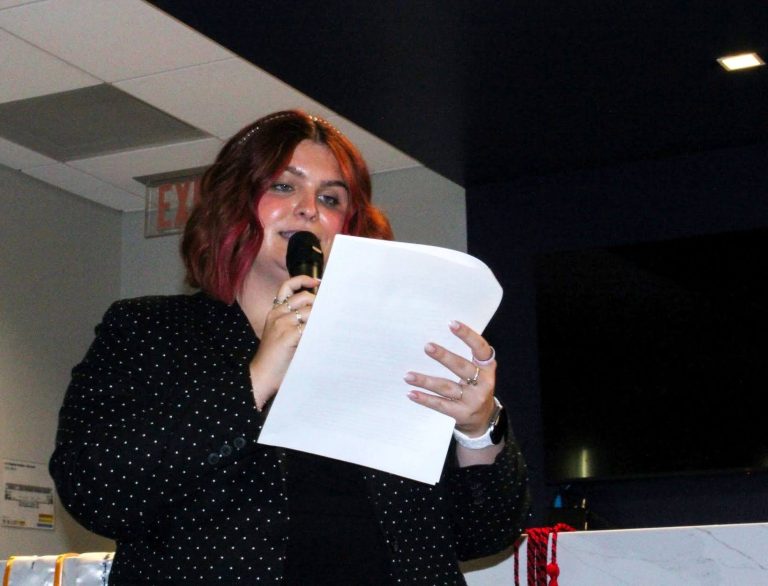
Concerts with Commentary is an event organized by TU’s school of music and open to all. Courtesy of @tuschoolofmusic on Instagram
Before the performers moved on to Weinberg’s Clarinet Sonata, the performers played through several moments from the piece while explaining their themes and historical context. That’s where the audience first learned the information in the previous paragraph, and that’s the pride of this series of performances; some professional orchestra concerts will feature brief interludes from conductors, composers, et cetera (especially when a celebrity soloist is featured), but many are wordless from beginning to end. The curtains raise, the orchestra performs, and the curtains lower. A focus on educating attendees on niche composers through their performance sets the Concerts with Commentary series apart from many other series of public musical performances.
They followed this with a performance of the full sonata, an approximately twenty-minute piece. As with many expert musicians and soloists, there was an energy to the performance. Experience leads musicians to add a confident air and physical flair to their performance. Not much remains to be said of the performance itself — for those interested who missed the show, the performers recommended the recording of the piece featured in this album (On the Threshold of Hope, by the Artists of the Royal Conservatory). The UTulsa Symphony Orchestra’s first performance is October 27 and the next Concerts with Commentary performance will be on November 6, and will feature a solo piano.