

The United States Senate has passed legislation regulating collegiate athletics and empowering the NCAA.
On Sept. 12, ESPN’s College Gameday made the unusual move of inviting Senator Ted Cruz of Texas to appear on the show before the Week Two Texas-Ohio State football matchup. He used his appearance to advocate for the Protect College Sports Act, which is supported by the American Athletic Conference and practically every other athletic conference. Cruz, a cosponsor of the bill, likened the college sports landscape to the wild west, arguing that action was needed to rein in this chaotic environment characterized by exploding name, image and likeness, or NIL, deals, unclear eligibility rules and unlimited transfer rights. Former University of Tulsa quarterback and football head coach Dave Rader said, “It is a true free market system right now, and why the federal government needs to be involved confounds me.”
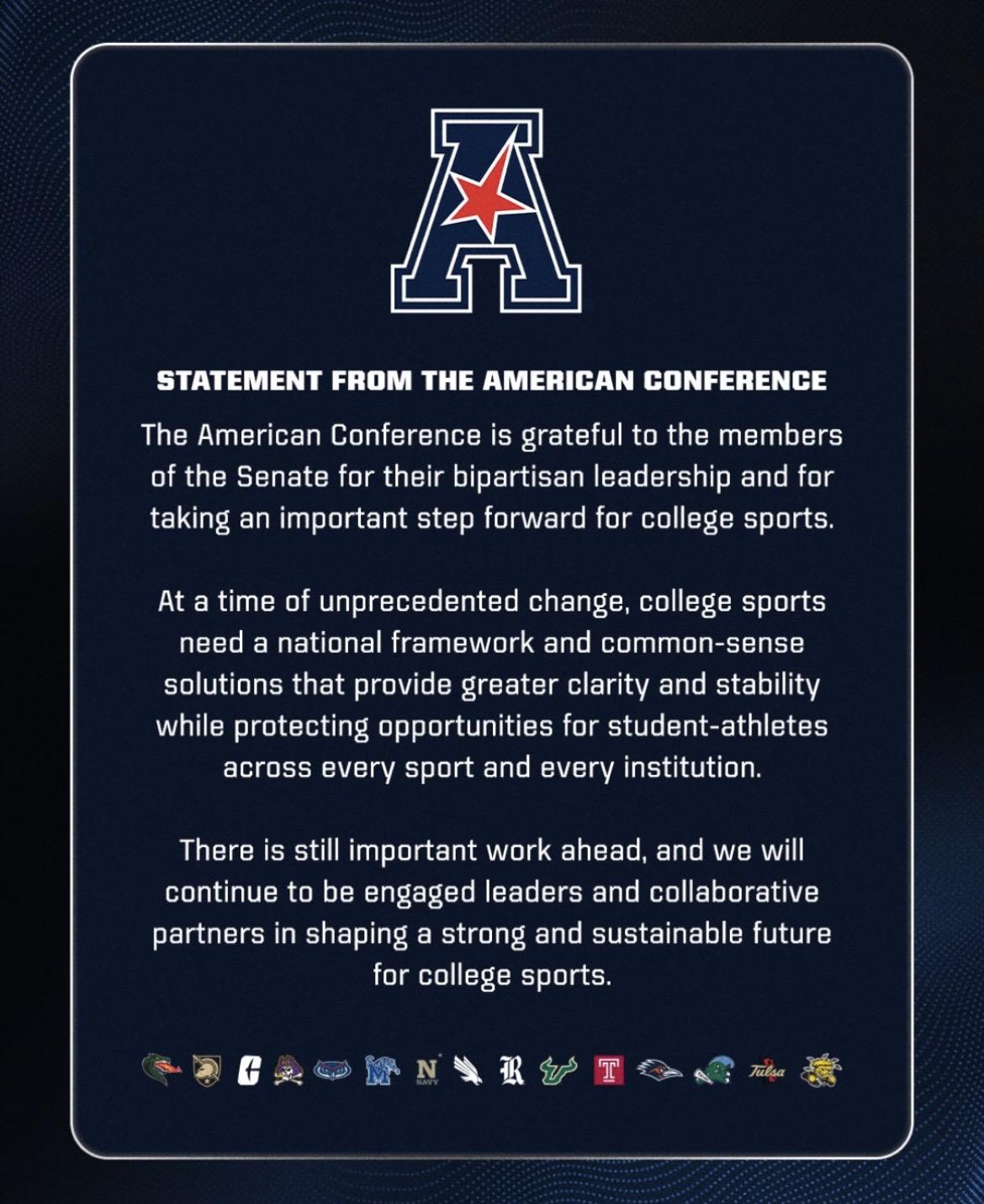
On Sept. 28, the American Conference released this statement about the PCSA on Instagram. Ian Orr | Collegian
The impetus for federal legislation comes as the National Collegiate Athletic Association’s authority to enforce its rules has been weakened by litigation over the past few years. For instance, the NCAA agreed to end its preexisting transfer rules in 2024, and in 2025 the House v. NCAA settlement established routes for programs to compensate players above the board which had not previously existed. Much of this litigation concerns the fact that the association operated, in Rader’s view, “like the [homeowners’ association] for years,” and when schools or players had grievances, they sued, arguing that the NCAA was behaving like a cartel. To this end, the PCSA gives the association a limited antitrust exemption so that it can enforce eligibility, transfer and NIL rules without violating the law.
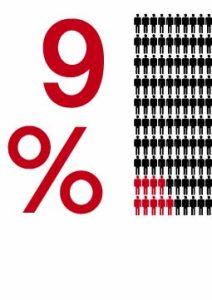
This erosion of rules has made it hard for athletic programs to stay afloat. Two-time Tulsa athletic director (1990-94, 2020-24), former athletic director at Tulane and Washington State and former Tulsa interim president Rick Dickson said, “Without any regulation or governing of the process … [the status quo] is unsustainable. … less than 10% of the schools were breaking even when you didn’t have athlete compensation. … So you add those expenses year after year after year to operations that don’t break even to begin with. That’s the stress that they’re feeling.”
Looking past the numbers, the existing environment creates problems for program development and culture. Junior English major and TU softball student-athlete Isabella Hardeman said, “I don’t think it’s fair … to just hop around and see where you can win the most at. I don’t feel like that really creates a good sports culture.” From a coaching perspective, Dickson puts it like this: “You recruit a student athlete, whether it’s out of high school or transfer. You have them for a season, and then the majority … are in the transfer portal, and for the most part, moving on … you go in knowing I’m starting from scratch every six months.” This is a universal issue, but it is especially familiar for Tulsa men’s basketball fans, whose record-setting 2025-26 season led players like Ian Smikle and Tylen Riley to transfer to more renowned programs.
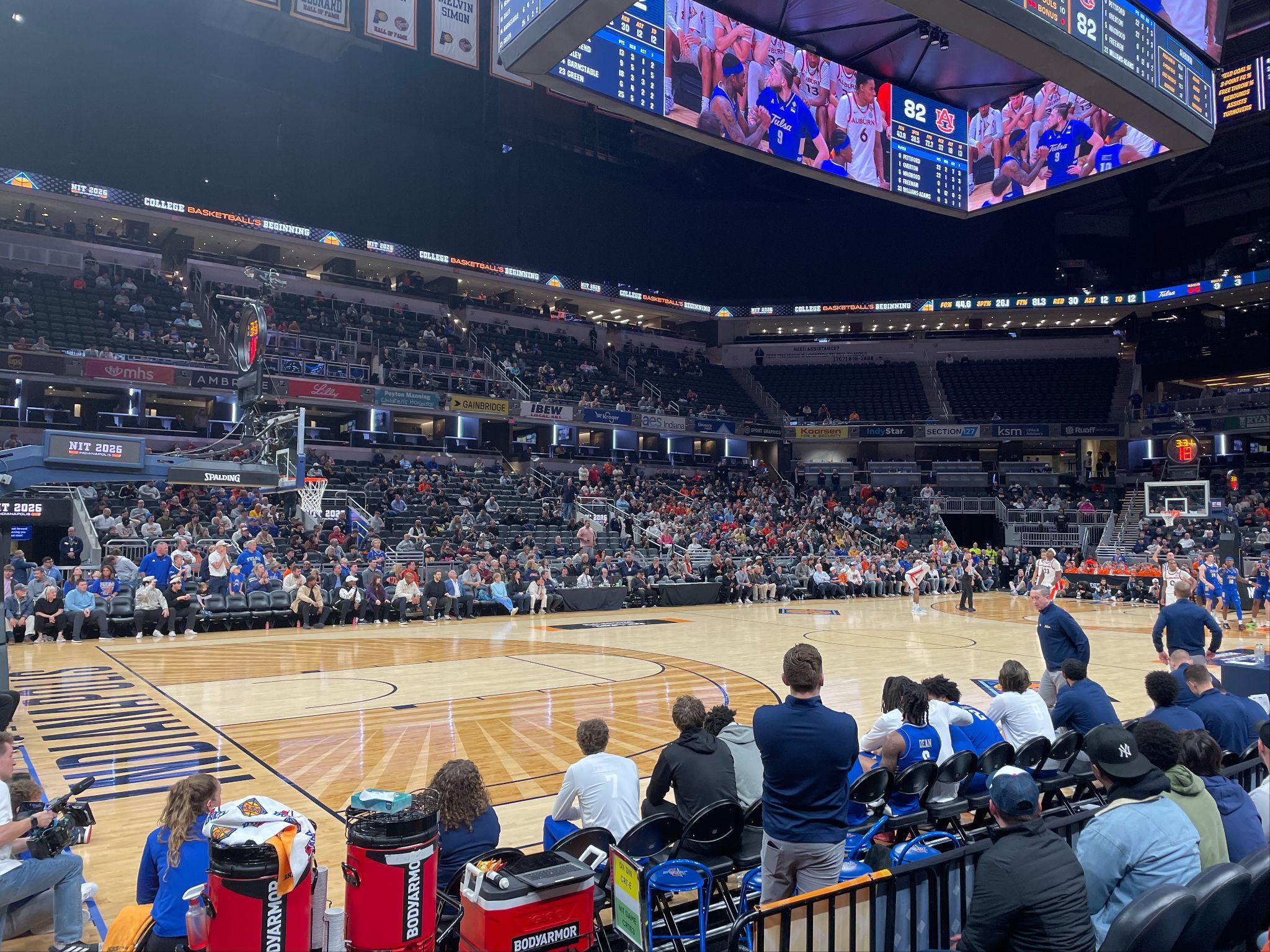
Tulsa Men’s Basketball lost many players in the transfer portal after last season’s NIT stint. Ian Orr
The PCSA may not be the best means to bring order to the chaos, however. It is opposed by civil rights groups and labor unions who see the bill as protecting wealthy schools and conferences at the cost of — and without the consideration of — Black student athletes. Derrick Johnson, president and CEO of the National Association for the Advancement of Colored People said in a statement that the bill “protects those powerful schools from accountability while stripping student-athletes’ ability to collectively bargain and limits their compensation for their hard work and skill. … We cannot continue to ask Black student-athletes to generate billions in revenue on the field and the court while they shoulder all the risk and receive none of the guaranteed security they deserve.”
One alternate pathway to order, which the PCSA sidesteps, is for student athletes to be considered employees who could then engage in collective bargaining with the NCAA, schools and conferences. The bill is explicitly neutral on athlete employment, ostensibly to satisfy schools whose tax-exempt status would then be jeopardized, according to Dickson. Rader finds this ridiculous, saying, “If you’re going to receive a check from the university, you’re an employee,” and argues, “The players should form a union and negotiate their own [collective bargaining agreement].” Dickson is also skeptical of the idea that student athletes in this era are not employees: “I was an amateur athlete and I supervised amateur athletes my whole career. This doesn’t seem the same.” If student athletes were unionized, Dickson reckons, “We could have negotiated a deal … [with] guidelines and parameters and caps and everything else, like the professional leagues above us.”
One quirk of the bill that has received less national attention is that there is no exception to the one-time transfer limit for junior college athletes. Athletes who played at a junior college have to transfer to a four-year college after their sophomore year to continue their studies and keep playing. As written, the PCSA treats this transfer from junior college to a four-year school the same as transfers between four-year schools.
Hardeman, who transferred to TU from Murray State College, said, “I don’t think that one year from junior college to a four-year [school] should count.” Under the PCSA, a student-athlete seeking to transfer between four-year colleges after having played at the junior college level would have to sit out for a year, a sanction that seems harsh considering the circumstances. Hardeman noted that the transition is tough academically, and that an athlete “who couldn’t keep up with school and academics” at a four-year institution could benefit from transferring to a less rigorous school. Hardeman believes the transfer limit “should be bumped up to at least two.”
For TU athletics, Rader does not believe things will change much regardless of whether this bill passes: “TU is still going to struggle every year.” Dickson shares a similar view: “TU’s always operated in the lower quarter of [athletics spending], but within that, I think TU’s done a good job historically.” Hardeman notes that, despite claims and measures in the bill that seek to protect women’s and Olympic sports — which are traditionally unprofitable and subject to cuts — “softball in the US has become a very popular sport.” She is optimistic about the sport’s future despite the chaos.
Having passed the Senate by a wide margin, the bill now travels to the House of Representatives, where it will not be heard until at least when the House returns from recess after the midterm elections. The bill faces an uncertain future in the House, where it is opposed by the Congressional Black Caucus and has faced concerns from members of the Freedom Caucus. It is unclear whether the bill will reach the House floor after the midterms, and it is likely to face significant hurdles going forward if it is not seen before the new Congress is sworn in this January.