
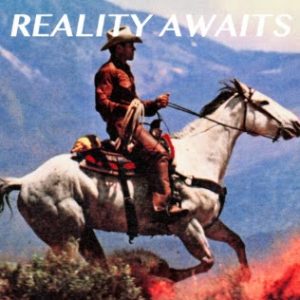



Released after a six-year gap, their sixth album does not fail to impress.
Reality Awaits, the latest album release by pop rock band The Strokes, presents an entirely different sound, which seems to divide a lot of the fanbase if social media discourse is to be trusted at all. And yet even in this new album, with a new sound, The Strokes are still making beautiful art.
“Psycho Shit” kicks off the album as an angry, ominous opener. It also kicks off the very controversial use of autotune, which continues throughout the album, but it lends itself well to the loss of identity and normality which also pervades the album. As such, it seems a very effective artistic choice. As for the melodic elements, they are very repetitive, but the song layers them well so that it never becomes boring and instead constantly builds that sinister rage.
“Dine N’Dash” is a rocker. The drum line in particular is amazing, which is so fast, so sharp and so impeccably in time — in other words, what people have always known to expect from The Strokes. “Dine N’Dash,” like “Psycho Shit,” is an anthem of hopelessness which hits so close to home, and plays the fine line between chaotic verse and quiet chorus so well that there is no other choice than to easily count it among the best songs of the album.
And then there is “Lonely in the Future.” Ironically, this almost-arrogant declaration of The Strokes’ prescience (and diss track to those who copy them or count them out too early) sounds more like a song from Is This It than any other track on the album, certainly as a callback to their own undisputed greatness. Other than that well-earned pride, it is just an amazing song that will have you trying to learn the stellar bass line.
“Falling out of Love” is a completely different type of song: much slower, much more repetitive and much more dependent upon the strength of the lyrics, so it is good that the lyrics are some of the best in the album. The storytelling aspect is spot-on, and the chorus so accurately captures the lament of a failing relationship. Maybe it is yet another song by singer Julian Casablancas about his ex-wife, but it is also yet another amazing song about Casablancas’ ex-wife.
Genius Lyrics have suggested that the title of the fifth song, “Going to Babble On,” is a play on “Going to Babylon,” and that the song itself is all about oppressive structures and the seductive illusions of opulence. While those themes are certainly present in the song, it is also a clear condemnation of the culture of social media, of being nonchalant and of avoiding real depth or clarity because the person is trying not to “babble on.” That resembles Babylon as well, a lavish lifestyle devoid of any actual meaning because the people are choosing to avoid it. Beyond the lyrics, the song is fun to listen to as well, with a fast-moving groove that does not lose its edge on replay.
It is important to note that the music video for “Going Shopping” is a very clear allusion to the song “You Can Call Me Al” by Paul Simon, one that shares the same sort of mid-life despair that “Going Shopping” encapsulates. The autotune once again serves that loss of identity, as Casablancas describes moving from the city to the country and then back to the city in search of happiness, all while the guitar rocks on with an excellent melodic line behind him the whole time.
“Liar’s Remorse” is, though it may seem uninteresting, a good artistic creation. Casablancas’ melody for most of the verses is left almost isolated, but this seems intentionally done in order to drive home the message of people trying to live life without experiencing any of the pain or suffering that comes along with it. Still, it is a hard one to listen to again.
“The Fruits of Conquest,” thankfully, reverses the damage to the album with an exceptional background layering of instruments that, though mostly repeated throughout the whole song until the bridge, is so captivating. And, of course, it is helped out by the message on the inherent laziness of virtue and conviction of corruption that even the best-meaning of “conquerors” seem to fall into. It is up to the listener whether those conquerors are interpreted as The Strokes themselves, the current political system or even some other third party.
Then “Tyrants of the Mellow Moon” brings the album to its end. The song speaks of the end of creativity and of the lack of new ideas. Ironically, the opening phrase sounds just like Radiohead’s “Faust Arp” and even the acoustic guitar strum pattern is very reminiscent of Radiohead’s “Paranoid Android.” The second half of the song becomes weird: Casablancas starts eerily repeating his own lines in a whisper before suddenly ending in a way that also seems to allude to Radiohead. All of this artistically serves the message of lost creativity, and so it has to be declared that this song works very well, despite its copycat nature and inherent weirdness.
The album is a force of artistic creativity, where every single element seems to serve the overall message of each song (with the exception of “Liar’s Remorse” which, although artistic, fails to be interesting). Altogether, the album is well organized with that hopelessness and loss of identity seeming to reappear in every single song. The verdict? The Strokes have done it again — Reality Awaits is well worth many listens, and a fantastic sixth album in one of the greatest discographies any band has ever had.