

First District democratic nominee sits for an interview with The Collegian and TUTV.
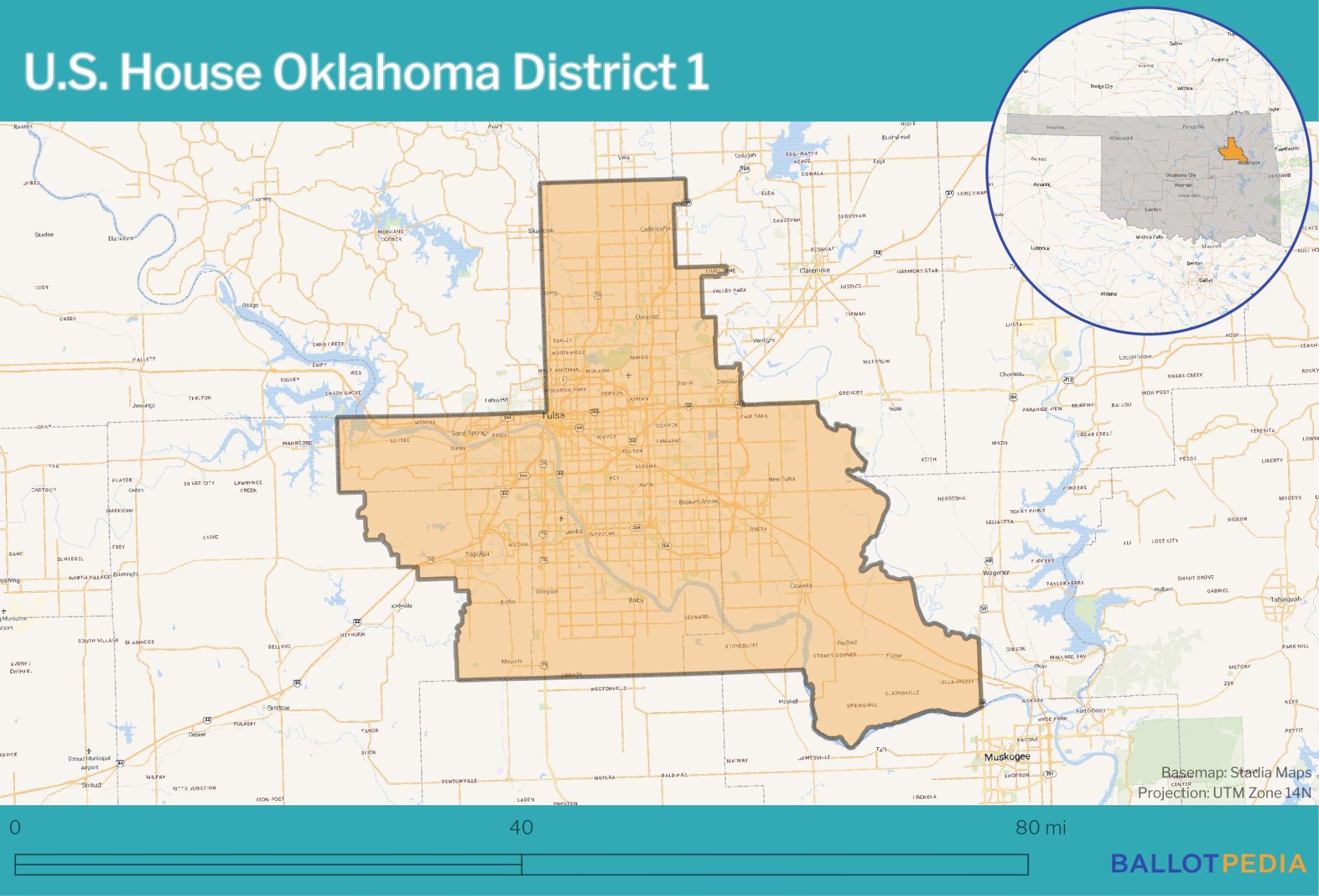
Last Wednesday, Oct. 7, 2026, John Croisant sat down for interviews with both TUTV and The Collegian. Croisant is a Democrat running for seat of Congressional District One in Oklahoma, which encompasses the Tulsa area.
Aiden Hoogstra (Interviewer): “To begin, would you mind introducing yourself?”
John Croisant: “I’m John Croisant. I’m a fifth-generation Oklahoma small businessman. I graduated from Jenks High School and … I have poly-sci, pre-law and secondary social studies degrees from the University of Tulsa. … I spent 16 years teaching social studies … And then, [in] 2018 — I had actually run for office in 2016 for state rep, and lost as a Republican — I switched … to the Democratic Party. … And then in 2020, I got the opportunity to be on the Tulsa [Public] School Board, and I’ve won two elections under the TPS board.”
Hoogstra: “Speaking of your membership on the District Five board of TPS, there are 17 schools currently facing closure, or consolidation, within the TPS system … you’ve said that you are somewhat in favor of the consolidation. Is that still true?”
Croisant: “Well, the issue [is] that we have to meet our budgetary restraints, okay? … We can’t be like the national government that goes $40 trillion in debt. So, we’ve cut $8 million per year from administrative costs, we’re also looking to cut about $11 million from just sites, from just the number of buildings, because we have 78 school sites. … We can’t increase class sizes. We’re gonna take all the teachers and staff from the buildings that are closing, and we’re gonna put them in schools [accepting displaced students].”
Hoogstra: “If you were elected to Congress, do you have any particular plans in regards to federal education aid that might be reflected here in Tulsa?”
Croisant: “Absolutely. So 11% of Oklahoma [Public Schools] dollars come from the federal government — 13% at TPS, because 84% of our students are economically disadvantaged. The majority of those funds come for IDEA [Individuals with Disabilities Education Act] for special needs students, and Title funds like Title I, Title II, so on and so forth. … The Trump administration wants to get rid of the Department of Education and cut all education spending from the federal government, and at the same time, invest in private school tax credits, which they’re doing in the reconciliation bill [Big Beautiful Bill Act]. So for me, I would not give money for tax credits to private schools. I would fund IDEA and Title funds higher.”
Hoogstra: “You mentioned … that you switched your party from Republican to Democrat. What was the motivation for switching to the Democratic Party? Was it primarily a falling out with the ideals of Republicanism, or would you say it was more so an attraction to the ideas of the Democratic Party?”
Croisant: “For me, when running as a Republican … it was in 2016, Trump’s first election. And so when I switched parties, it was because — number one — when I talked to everybody [when campaigning door to door], I only met one person that wasn’t for public education. [Republicans] didn’t want to pay teachers more, they didn’t want to invest in public ed … and really, I was even told by somebody in the Republican Party, ‘John, I really like you. I like your ideas. But I would never vote for a teacher,’ because they didn’t like education. So education has always been a strong point for me, and I was still a teacher at that point. The other part is Donald Trump. …It’s that the Republican Party right now is not about limited government; it’s actually about being more intrusive into your daily life. It’s not about fiscal conservancy, I mean, I’m talking about trying to stay within budget. I’m against a $40 trillion deficit, I think that is one of the most dangerous things we have, and we don’t balance budgets. … For me, what I think that the Republican Party has become just about Donald Trump, and divisiveness, and about a cult of personality as opposed to being about any specific value. … It’s not about helping America. It’s more about corporate greed and about cutting taxes for the wealthy.”
Hoogstra: “What would you say, given this goal of helping America, is the biggest issue facing the United States right now?”
Croisant: “I think affordability, right off the bat. … We can’t afford healthcare. We can’t afford our utility bills. Electric is up by 25%. And even [in] Oklahoma, where[as] the national wages have gone up by 6%, we’ve gone up by 3%. You make $16,000 less than everybody else across the country. … Even though things might cost a little less here for a house, they’ve tripled or quadrupled just since 2020…
“…Second, it’s got to be the deficit, right? It’s that we can’t spend — I mean — it’ll be $2 trillion, $1.9 trillion this year, and it’s supposed to go up to $4 trillion in the next decade, per year. We’re not going to be able to afford everything that we’re paying for — mortgages, all credit card debt, all that’s going to increase in price.”
Hoogstra: “Could you give one piece of example legislature that you think would help … cut the deficit and help with affordability?”
Croisant: “Yeah, so I think repealing the reconciliation bill, or the ‘Big [Beautiful] Bill [Act].’ Because that is gonna add $4 trillion because of tax cuts, … then it cuts expenses, but they’re going to the people that need it the most: Medicaid and SNAP [Supplemental Nutrition Assistance Program] benefits. So, to me, what we should be doing is repeal that bill, so that people are paying their fair share — the majority of that [tax] can go on to millionaires and billionaires.”
Hoogstra: “Right. Now, you mentioned energy as well in affordability. And I know part of your campaign is on bringing more diverse energy outcomes into Oklahoma and focusing on “all kinds of energy.” … Oklahoma is, I believe, sixth for natural gas in this country right now, and we’ve been known as an oil state … but there are also environmental consequences with that. Would you increase investment in oil and natural gas production in Oklahoma?”
Croisant: “I mean, right now, we’re producing more than we’ve ever done, but yet gas is almost $4 a gallon. $6 for diesel? Yeah. The problem isn’t production — we’re producing enough for everybody. … I wouldn’t increase it. Why would you? It’s a profitable industry … but oil companies are moving out of Oklahoma — two of them just left. Why did they leave? The two reasons they gave [were] education and workforce development.”
Hoogstra: “What do you think … that you can do in Congress that would be seen by a petroleum engineer here at the University of Tulsa that would markedly change their life, or make them want to stay?”
Croisant: “Number one: we’re taking away scholarships from international students and undocumented students; they’re not getting any funding, whether it go to TCC, TU or anywhere else. I believe if you’re a student in America — and you’ve been going to school at East Central, or Jenks, Broken Arrow, Owasso, Edison — that you should have the same opportunity for scholarships that the rest of your classmates are getting, right? … Or, again, we give more opportunities to people that … graduate from TU. We don’t force [international students] to leave the country once they graduate; they can stay here. …
“…But also on top of that, we need to increase our education funding. More opportunity, and we just lowered the price of TU. Part of the problem with people not going to college is [that] they can’t afford it. And so how can we encourage more people to do that? Well, it starts at K-12. So what we’re going to do at TPS is, we’re creating college and career academies, and if we can fund IDEA and Title funds more, [we] have more general funds to create career paths.”
Hoogstra: “I’m going to switch tracks a little bit. The last time District One in Oklahoma has had a Democratic representative was 1987.”
Croisant: “Yeah, Jim Jones. He started in 1978 and I think he left after that.”
Hoogstra: “Yep. And we haven’t had a Democratic representative since 2021 in Oklahoma at all. So, realistically, do you believe that your chances are good for taking this election?”
Croisant: “Yeah, so we’ve already seen [that] District One and District Five are both in play. … My opponent, again, has never actually won an election. … C.D. One has actually shifted, in that it’s more [so] just Tulsa. … 66% of Tulsans voted for a Democrat [in 2024]; the middle of Tulsa is blue…
“…For like the last year and a half, we’ve [also] been the top door-knocking canvassing campaign. … We’re using social media and young people to our advantage, because I was a teacher…
“…But the other thing is … the early voting locations. It was that there [were] only two: one in East Tulsa, and one in Broken Arrow. They’ve added one at O’Brien Park and in Chandler Park…
“…Along with [that], I think people are going to show up. Because they’re tired of ICE [Immigration and Customs Enforcement]. They’re tired of the war in Iran. They’re tired of not having any money in their pocket. They are tired of $4 gas. And so I think people are going to show up.”
Hoogstra: “One last question … If there’s anything you’d like to tell [TU students] about your campaign, is there one singular message about why they should vote for you, or what you’re going to do for students here at TU?”
Croisant: “I would say that if you want somebody who’s gonna listen and represent them, no matter what their ideology is, no matter what their political background, that John Croisant is someone who’s gonna show up, he’s gonna listen, and he’s gonna go work for you.”
John Croisant will be on the ballot for the First Congressional District. Students who registered by Oct. 9 can vote at the Lorton Performance Center on Nov. 3 from 7 a.m. to 7 p.m.