
Students speak out against the new bookstore inefficiency.
“My main complaint is that I would like to have my books that I get assigned. It’s just so needlessly complicated when half of the people have their assigned books and the other half don’t,” observes sophomore Reese Wood, perfectly capturing the frustrating reality of the University of Tulsa’s classrooms this semester. The frustration is not his alone; it is already the third week of classes, and many students are still waiting on more books to have all the required materials for their coursework. To make matters worse, when physical books do arrive, they are often battered and heavily written over. This campus-wide chaos is the direct result of the university bookstore transferring control of our book supply to Barnes & Noble — a corporate transition which was probably meant to streamline learning material operations, but has instead left many students empty-handed.
The most glaring issue of the new bookstore system is the unprecedented timeline of the delays. In college, the first few weeks set the foundation for a student’s academic trajectory for the entire semester. Yet weeks after the start of term, a staggering number of students have yet to receive the textbooks they need. Asa Howard, a sophomore in the Honors College double-majoring in mechanical engineering and Spanish, noted,“I’ve gotten one-third of my textbooks by the third week of classes.”
This backlog deals an especially devastating blow to Honors Students, where the curriculum is explicitly built around the rigorous reading and discussion of classical texts. Unlike STEM or business courses that might rely on digital problem sets or broad lecture slides, this humanities-heavy track demands immediate, page-by-page engagement with specific translations of historical and philosophical works from day one. Without these foundational, physical books in hand, seminar-style discussions stall, and students find themselves profoundly disadvantaged in a curriculum that leaves no room for delayed starts.
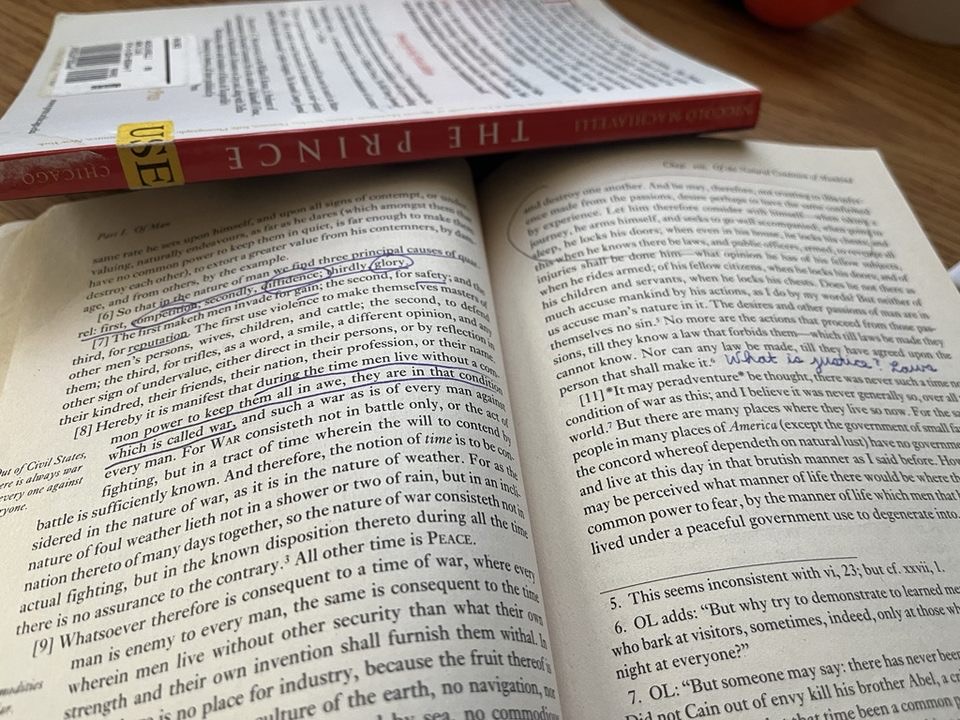
Author Stephen Lambert’s books arrived in previously annotated and in “battered condition” Stephen Lambert
Even in courses where professors are trying to accommodate the bookstore’s shortcomings, the psychological toll on students is overwhelming. History major Colin Christiansen shared a common anxiety: “I haven’t gotten any of my books yet. I don’t think we’ve started on any of them yet, but still, it’s frustrating.” It should not require sheer luck or the pity of a professor just to have the basic tools required to learn.
Beyond the simple logistics of shipping delays, the transition has revealed alarming institutional and administrative errors. It seems the new system is not accurately tracking which resources some classes actually require. Sophomore philosophy & religion major Noah Taylor highlighted the grave extent of this breakdown, stating, “They didn’t have the Latin textbook registered as a course material, even though Latin classes are the ones using a Latin textbook!” It is the obvious but unfortunate reality that when a book supplier cannot connect the most painfully obvious dots, it falls entirely on frustrated students and faculty to correct the record.
A university bookstore should exist to serve the academic needs of the student body, not to treat course materials like backordered retail items from Target or Amazon. When students pay tuition, they are paying for an education that requires preparation from day one. By forcing them to wait late into September for beat-up, used copies — or worse, failing to register texts entirely — this Barnes & Noble partnership is actively undermining academic success. The university needs to hold its new vendor accountable, because right now, students are paying the price for corporate inefficiency.